Showing posts with label APHIS. Show all posts

Saturday, February 01, 2014

USDA APHIS-PPQ species intercept report to Maryland Invasive Species Council (MISC) January 2014


               The Maryland Invasive Species Council (MISC) meets every other month throught the year.  MISC provides leadership concerning invasive species and encourages efforts that prevent the introduction of, and manage the impact of, invasive species on Maryland ecosystems. MISC members include federal, state and local government as well as private industry and non-profit groups.

               USDA APHIS-PPQ Baltimore makes available to MISC members, and therefore the public at-large, information about non-indigenous, and possibly invasive species interceptions. APHIS-PPQ reports regularly to MISC about its efforts to safeguard agriculture and natural resources from the entry, establishment, and spread of animal and plant pests and noxious weeds into the United States of America supporting, thereby, trade and exports of U.S. agricultural products.

               At the January 2014 meeting of MISC, APHIS-PPQ described the following port-of-entry invasive species intercepts.

Adult Dolycoris baccarum: Norfolk (May 2008) ©Tristan Bantock
 The stinkbug [need I say more] Dolycoris baccarum, the Hairy Shieldbug or Sloe Bug, a  species of shield bug of western Mediterranean origin in the family Pentatomidae. was intercepted in a shipment of tiles from Italy. Also know as the berry bug, D. baccarum is a threat to strawberries, artichokoes, potatoes, tobacco, cereals tp name but a few crops.  This pests has not been found in Norfolk since early 2009.


Dolichoderus quadripiunctatus was intercepted at the port of Baltimore for the first time and it was only the second time this species has been intercepted entering the US (first interception: Seattle 2009).

A scale identified by the national specialist as Palmaspis sp. (Asterolecaniidae) was intercepted on Arenga sp. from Jamaica. This is the first time this genus has been intercepted at BWI.

  
A caterpillar was found in a shipment of Tulip popular from Chile. The caterpillar was identified as Elaphria sp. There are more than 100 species of Elaphria described
however very few of the caterpillars are known. According to Olivares et al. Elaphria bucephalina is the only species known from Chile.
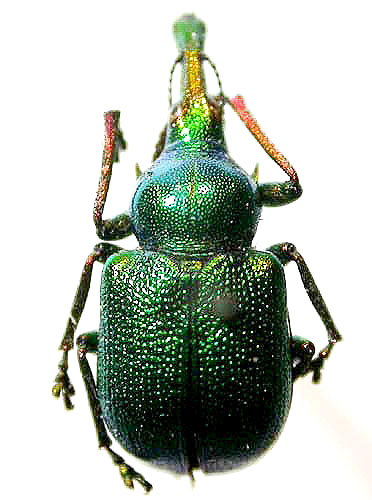
Byctiscus betulae (Linnaeus, 1758)
   Atlas of beetles of Russia
 Photo by K.A. Grebennikov
 Two male and two female Byctiscus betulae (Attelabidae) were found in a shipment of tile from Italy at the Port of Norfolk. This is the first time this species has been found entering the US. This pest is a leaf roller that is reported to feed on Betula sp., Populus tremula and occasionally Salix sp.

The hopper Neophilaenus sp. Aphrophoridae (previously Cercopidae) was intercepted for the first time at the port of Norfolk and only the second time nation wide.

Another stinkbug, Eysarcoris ventralis, was intercepted for the first time in 2 years in the Mid‐Atlantic and only the second time by Norfolk CBP (first Nov. 2008).

The snail Xerotricha conspurcata was intercepted in the Mid‐Atlantic region 76 times in
2013 (41 Baltimore, 35 Norfolk).


Friday, May 17, 2013

More invasive species detected at US ports in the Mid Atlantic


               Insect as well as plant and animal species from around the world can hitch a ride in a manner of speaking, on cargo shipments, moving from their native lands to exotic foreign destinations, and sometimes stay and establish a new home. Ports of entry like Baltimore and Norfolk are doorways to establishment of species that may impact livelihoods by altering the characteristic services of ecological systems.

               The front-line of defense is the U. S. CBP,
"one of the Department of Homeland Security’s largest and most complex components, with a priority mission of keeping terrorists and their weapons out of the U.S. It also has a responsibility for securing the border and facilitating lawful international trade and travel while enforcing hundreds of U.S. laws and regulations, including immigration and drug laws. Amopng other tasks," CBP performs two crucial roles in facilitating trade to and from the U.S. and around the globe: securing it from acts of terrorism and assuring that goods arriving in the U.S. are legitimate and that appropriate duties and fees are paid."[1]

Working with USDA ARS Systematic Entomology Laboratory and USDA APHIS Plant Inspection Stations, and APHIS Plant Protection and Quarantine (PPQ). the organizations work to protect American jobs, businesses and the ecosystems that support them. Recent interceptions of non-native and potentially harmful insect species provide  highlights of the impossible nature of their underfunded mission. USDA APHIS PPQ reported at the Maryland Invasive Species Council's May 2013 meeting the following interceptions.

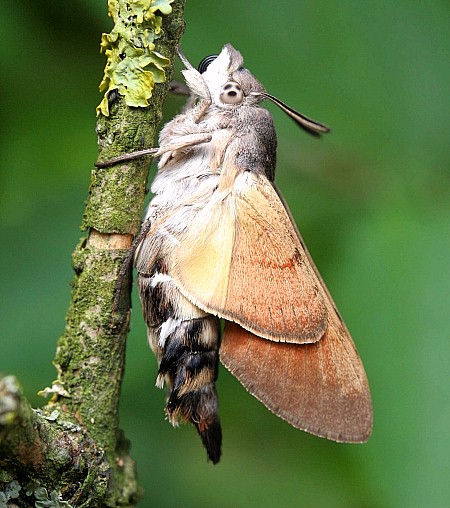
Macroglossum stellatarum
tpittaway.tripod.com

               At the port in Norfolk, Virginia CBP intercepted for the first time, Macroglossum stellatarum  Linnaeus (1758), the hummingbird hawk-moth. The moth is found though out most of Europe, Asia and Northern Africa. While the species is unable to survive cold winters, the adults are strong enough fliers that they seasonally migrate from the Mediterranean region North to Sweden & Iceland. The Encyclopedia of Life notes that
"The hummingbird hawk-moth is named for its long proboscis (straw like mouth) and its hovering behavior, which, accompanied by an audible humming noise, give it remarkable resemblance to a hummingbird as it visits flowers to feed on nectar."[2]
Humans see various shades of dull brown or grey in the forewings of the moth. On the other hand, they reveal characteristic fluorescent yellow, violet, purple and green patterns under ultraviolet light . Thus to birds and other insects the moth is most likely brightly patterned.[3]

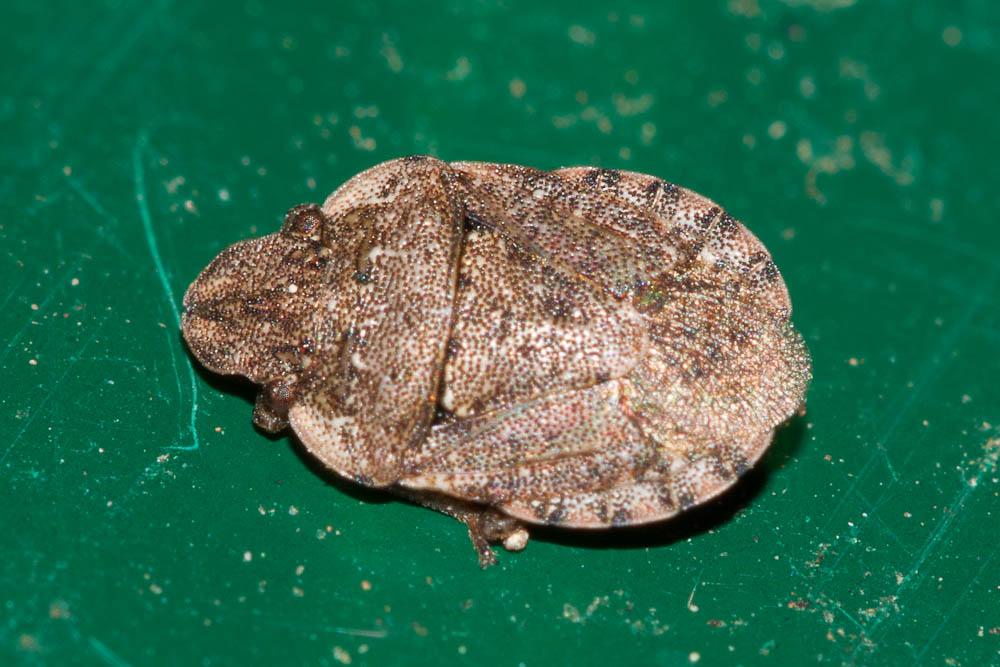
Coreus marginatus
www.britishbugs.org.uk
               The Port of Norfolk also saw for the first time the arrival and discovery of Coreus marginatus Linnaeus (1758). The uninvited accidental visitor was found in a shipment of tile from Italy. This species if found throughout most of Europe where it feeds on plants in the genus Rumex. In addition inspectors also discovered at the Norfolk facility an adult moth hiding out amongst military cargo. The moth was identified as Autophila ligaminosa Eversmann (1851). This is the first time this species found in the sub-alpine region from the Balkans west to Afghanistan has been identified entering the US.  
Autophila ligaminosa 
www.ppis.moag.gov.il -


               In the historic rivalry between Virginia and Maryland, the Port of Baltimore was not without its own early detection of non native visitors taking advantage of the enormous flow of global trade. And to make matters even worse one of the interception was yet another stink bug. Baltimore CBP found a moderate sized stinkbug in a shipment of tile that was later identified to be Sciocoris sideritidis Wollaston (1858). This is the first time this species has been identified entering the US. Just wait until an undetected mating pair of this new species to the shores of the United States sets up shop and works with the two existing invasive stink bugs already sucking their way through vegetables, fruits, and soya beans. Reducing USDA funding through political mismanagement and grand standing in Congress is a sure way to encourage this opportunity. 

Sciocoris sideritidis
www.naturedugard.org 

             And last but not least, remembering that airports are ports too, a baggage interception in Baltimore was confirmed to be Tetraleurodes andropogoni Dozier (1934), a type of white fly. This is the first time this species have been intercepted entering the US.  According to CPB "the insects were discovered on fresh leaves being carried by a passenger originating from Nigeria and arriving from the United Kingdom."[4]  


[2] EOL. Macroglossum stellatarum. [accessed May 17, 2013] http://eol.org/pages/396579/overview
[3] Macroglossum Scopoli, 1777, Introd. Hist. nat.: 414. [accessed May 17, 2013] http://tpittaway.tripod.com/sphinx/m_ste.htm
[4] Baltimore CBP Intercepts First in Nation Whitefly. Thursday, April 11, 2013. [accessed May 17, 2013] http://www.cbp.gov/xp/cgov/newsroom/news_releases/local/04112013_7.xml

Saturday, January 19, 2013

Invasive species 'boxbug' tries to sneak past APHIS

Gonocerus acuteangulatus (Goeze 1778)
boxbug
image from British Bugs web site


               Invasive species are all around us. The eat our lunch, they make us sick, and they change our landscapes. Invasive species cost us money...lots of money...some say over 130 billion dollars a year in the United States alone. Most of only get excited about invasive species when they directly and immediately injure us personally.  We remain landscape illiterate convinces that food comes from stores, and clean water from pipes.

               The United States Department of Agriculture's Animal and Plant Health Inspection Service (USDA APHIS) works to stave off the introduction and establishment of harmful invasive species.[1] APHIS and its ever-smaller budgets is faced with more "stuff' coming in to US ports each year. And who is APHIS' stakeholder that should be clamoring for increases to protect our pockets, food, and health? Why we the very people who have no clue. Somehow we have the idea that the infrastructure started by Lincoln and enhanced by Presidents through the 1960s now needs no support at all. Our arrogance is only unsurpassed by our inability to see tomorrow.

               If you live in the Mid-Atlantic you already know about the stink bug because it decided to not only cost the fruit industry millions but more importantly for you, because it moved in by the thousands to your personal space and caused you discomfort. So you call on APHIS and demand to know why and then fail to give it the money to prevent the next critter from moving in.

               With little support from the calmly disinterested public (those without stink bugs, pythons, flying fish and rock snot in their lives so far), the dedicated employees of APHIS and its sister organizations ARS and the Forest Service) work to keep the next invader out of your personal space. They work tirelessly to safeguard the United States much like the heroic 'Little Dutch boy' who stuck his finger in a hole in the dike to save his world from certain doom.

              And what has APHIS done lately for you - especially those of you who garden or make your living selling plants? In December, the keen eyes of USDA APHIS port inspectors in Baltimore, Maryland spotted for the first time a Coreid, Gonocerus acuteangulatus (Goeze 1778). G. acuteangulatus, commonly called known as a boxbug in the United Kingdom, id a "relatively large reddish-brown squashbug, distinguished from the commoner Coreus marginatus by the narrower abdomen and more pointed lateral extremities of the pronotum. Nymphs have a green abdomen." The website, British Bugs, goes on to describe this new invader to the US as historically very rare in the British Isles and known only from Box Hill in Surrey, where it feeds on box trees (boxwoods). British Buigs continues its report noting that the "bug is expanding its range and now occurs widely in the south-east of England and beyond. It is exploiting different foodplants, and has been found on hawthorn, buckthorn, yew and plum trees." Reports from England report that it seems prefers berry bearing species such as hollies and ivies.[2]  The boxbug is also reported as a major problem for hazelnut production in Italy.[3]

               APHIS also reports that the recently intercepted boxbug, G. acuteangulatust is a primary pest of boxwood, but is also recorded feeding on important landscape and garden plants such as hawthorn, buckthorn, yew and plum trees. According to a report in the Washington Times, the boxbug, referred to as a squashbug in the article, was "destined for Eldersburg, Md.  CBP (U.S. Customs and Border Protection) issued an Emergency Action Notification to the importer requiring the shipment to be re-exported or destroyed."[4]

               The possible introduction of this invasive pest would add to the litany of invasive species problems facing farmers and gardeners in the United States. We, all of us, should be actively supporting enhanced funding for USDA APHIS. It is worth noting that APHIS also quietly protects natural areas from invasive species that creep through our trade routes into our ports and out into our fields and woods.


[1] The Animal and Plant Health Inspection Service is a multi-faceted Agency with a broad mission area that includes protecting and promoting U.S. agricultural health, regulating genetically engineered organisms, administering the Animal Welfare Act and carrying out wildlife damage management activities.  These efforts support the overall mission of USDA, which is to protect and promote food, agriculture, natural resources and related issues.

To protect agricultural health, APHIS is on the job 24 hours a day, 7 days a week working to defend America’s animal and plant resources from agricultural pests and diseases.  For example, if the Mediterranean fruit fly and Asian longhorned beetle, two major agricultural pests, were left unchecked, they would result in several billions of dollars in production and marketing losses annually.  Similarly, if foot-and-mouth disease or highly pathogenic avian influenza were to become established in the United States, foreign trading partners could invoke trade restrictions and producers would suffer devastating losses.    http://www.aphis.usda.gov/about_aphis/
[3] Vaccino et al. 2008. Detection of damage due to bug feeding on hazelnut and wheat by biochemical techniques. Bulletin of Insectology 61 (1): 189-190.
[4] Jerry Seper. December 12, 2012. ‘Squashbug’ nabbed at Baltimore Harbor. The Washington Time. [accessed January 19, 2013] http://www.washingtontimes.com/news/2012/dec/12/squashbug-nabbed-baltimore-harbor/
"The importer plans to fumigate.
Upon Friday’s discovery of the bug, CBP forwarded the specimen to a USDA Animal and Plant Health Inspection Service Plant Protection and Quarantine entomologist for identification. CBP agriculture specialists work closely with USDA to protect the nation’s agriculture resources against the introduction of foreign plant pests and animal diseases.
CBP agriculture specialists have extensive training and experience in the biological sciences and agricultural inspection. On a typical day, they inspect tens of thousands of international air passengers, and air and sea cargoes nationally being imported to the United States and seize 4,291 prohibited meat, plant materials or animal products, including 470 insect pests."


Read more: http://www.washingtontimes.com/news/2012/dec/12/squashbug-nabbed-baltimore-harbor/#ixzz2IQluwQPK
Follow us: @washtimes on Twitter

Friday, November 23, 2012

Mexican fruit fly apprehended in Maryland

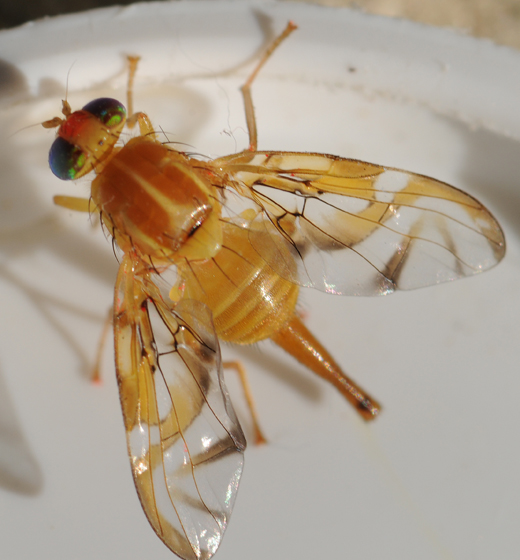
Mexican fruit fly, Anastrepha ludens (Loew).
Image by by Hartmut Wisch.  Iowa State University: BugGuide


          In what was an inevitable outcome of massive international trade, a male Mexican fruit fly, Anastrepha ludens (Loew) was intercepted in Maryland for the first time at the Baltimore-Washington International Airport in September.[1] The United States was once insulated from novel species accidental introductions by cast oceans and particular predictable long term weather patterns. Unless intentionally introduced and cultivated until established, species did not simply wander in. Today, the size and scope of international trade provides the perfect pathway for repeated unintentional introductions of non-indigenous species a few of which get their green cards quickly and begin to proliferate causing harm to commerce and to ecosystems. We call these few invasive species.

          The skill and proficiency of USDA APHIS and ARS scientists and professionals collaborating with  U.S. Customs and Border Protection work to prevent the introduction of unwanted, unknown and potentially harmful organisms. Finding one fruit fly at one airport should give us pause to consider the likelihood that a Mrs. Anastrepha managed to escape detection.
The Mexican fruit fly is at home in Mexico and much of Central America as far south as Costa Rica. It has migrated into the cultivated citrus sections of the west coast of Mexico and northward toward Texas, Arizona and California.  

          In January 2012, the USDA-APHIS announced that the Mexican fruit fly was eradicated from the last county in Texas in which it had been present.[2] However only three months later on March 9, 2012, the Animal and Plant Health Inspection Service (APHIS) established a Mexican fruit fly (Mexfly) quarantine area in the San Benito area of Cameron County, Texas applying restrictions on the interstate movement of regulated articles from this area in order to prevent the spread of Mexfly to non-infested areas of the United States.[3]

          The really big question is why you care. Out visitor reduces the amount of all varieties of citrus that you can buy, lemons and sour limes excepted. The Mexican fruit fly loves grapefruit most of all but is comfortable competing with you for oranges, white sapote and mango. Closer to home in Maryland are pears, peaches and apples are eagerly sought after by our new acquaintance. And if this were not enough, A. ludens has been shown, according to the University of Florida's Featured Creatures website, to sample avocado, cherimoya, custard apple, mamey, pomegranate, quince, rose apple, yellow chapote, cacti, figs, bananas, tomatoes, peppers, squash and beans.

          Invasive species do matter, and they do cost. More than a decade ago invasive species were estimated to impact the United States to the tune of 130 billion dollars a year.[4]  Do you think this cost has gone down, or given the reduction in the scope and funding of the federal government and the increase in global trade, gone down?


[1] USDA APHIS handout to the Maryland Invasive Species Council November 2012.

[2] Featured Creatures provides in-depth profiles of insects, nematodes, arachnids and other organisms. The site is a cooperative venture of the University of Florida's Entomology and Nematology Department and the Florida Department of Agriculture and Consumer Services' Division of Plant Industry. [accessed November 23, 2012]http://entnemdept.ufl.edu/creatures/fruit/tropical/mexican_fruit_fly.htm

[3] From February 27 to March 7, 2012, seven unmated and one mated adult female Mexflies were detected in grapefruit and orange trees located in a commercial grove in the San Benito area of Cameron County, Texas. APHIS, in cooperation with the Texas Department of Agriculture (TDA), is responding to the detection. .. The establishment of this quarantine area is posted on the following APHIS website, which contains a description of all the current Federal fruit fly quarantine areas: http://www.aphis.usda.gov/plant_health/plant_pest_info/fruit_flies/index.shtml   [accessed November 23, 2012] http://www.pestalert.org/oprDetail.cfm?oprID=515

[4] Economic and environmental threats of alien plant, animal, and microbe invasions (2001)
David Pimentel, S. McNair, J. Janecka, J. Wightman, C. Simmonds, C. O’Connell, E. Wong, L. Russel, J. Zern, T. Aquino, T. Tsomondo  [ACCESSED nOVEMBER 23, 2012] http://www.invasivespeciesinfo.gov/economic/us.shtml#.UK9-O4c8CSo

Friday, June 01, 2012

USDA Updates Emerald Ash Borer Quarantine Policy


EAB. Emerald Ash Borer, is a wood-boring beetle from Asia that feeds on ash trees. 


USDA Updates Emerald Ash Borer Quarantine Policy
Federal Order Focuses on Perimeter Areas

WASHINGTON, May 31, 2012-- The U.S. Department of Agriculture’s Animal and Plant
Health Inspection Service (APHIS) today issued a Federal Order updating its Emerald Ash Borer
(EAB) quarantine policy. The Federal Order allows unrestricted interstate movement of
regulated articles within contiguous federal quarantine boundaries, with the exception of
movements to protected areas within the existing quarantine area. The change will become
effective on July 1, 2012.

The protected areas include any area identified by a state as pest free for which the state has
regulations to protect against the human assisted intrastate spread of EAB.

APHIS’s EAB program seeks to manage the invasive EAB using the best science and tools available, with emphasis on activities that are most effective in stopping/slowing the spread of
EAB to new areas. APHIS is now modifying its policy to focus its regulatory efforts on the
perimeter of quarantined areas. This will allow for the best use of available resources and reduce
the complexity of the requirements for affected stakeholders.

The policy change will allow EAB regulated articles to move freely within contiguous
quarantined areas, except interstate movement into the protected areas. Movements of regulated
materials from quarantined areas to protected areas must be done with a properly issued federal
certificate or limited permit. Requirements for movement of regulated materials out of the
federal quarantined area, regardless of destination, will remain unchanged.
Companies and individuals should also check for and follow any relevant state EAB
quarantine regulations.

Regulated EAB material includes all ash wood with the bark and sapwood remaining, ash
nursery stock, and all hardwood firewood.


Joelle Hayden (301) 851-4040
Sharon Lucik (810) 844-2713

Sunday, May 20, 2012

More Megacopta cribraria - kudzu bug - a recent introduction to the United States; another invasive species


kudzu bug 
Megacopta cribraria (Fabricius)

image by Joseph LaForest,  University of Georgia, Bugwood.org      


               I wrote about a recent invasive arrival to the United States last year Sunday, October 30, 2011"A new invasive species: Asian kudzu bug Megacopta cribraria attacks legumes in US" This newcomer to American ecosystems, Megacopta cribraria, is native to India and China and is also found in Indonesia, Japan, Korea, Malaysia, Pakistan, Sri Lanka, Taiwan, Thailand, and Vietnam. The bean plataspid is pea-sized, greenish brown, and round with a wide posterior. In case you need to know, the insect  to waddle when it walks on a surface and is an excellent flier.[1]

               This insect is an invasive species from Asia that attacks soybean and other legumes. It also beneficially also feeds on kudzu, an invasive plant species that has spread throughout the southern United States. This sets up a classic collision of desires for it is reducing some of the invasion pressure of kudzu while at the same time threatening the heart of American agriculture.  USDA-APHIS reports that the "pest, which is sometimes called the kudzu bug or lablab bug, was first detected in the United States in November 2009 on kudzu in Barrow County, GA. At that time, a number of homeowners complained about a large number of bugs that had swarmed onto the sides of their homes and other structures, leaving a mildly offensive or bitter odor in their wake. As of August 2010, the bean plataspid has been identified throughout Georgia, in numerous South Carolina counties, and in one North Carolina county."

               So far this particular blog - and this pest - reads like the innumerable other posts about invasive pests that have established in the United States and are causing harm to our ecosystems and the services and resources they provide. And, because it is more of the same thing, most of us are becoming hardened to the point of  being inured and unconcerned by what seems to be background disturbance, a life-style noise and an acceptable condition of modern life. In other words, as with most things today that involve the environment, the this invasive insect and the damage it causes are someone else's problem because it is not directly impacting anything we care about at the moment.
               It turns out that there are places in the world that do not want this invasive insect and are willing to stop American shipping from bring our goods such as cotton to their ports.[2] Honduran officials refused thousands of pounds of goods already landed in their ports this winter after finding several dead bugs in the bottom of cargo containers because of their concerned after learning about reports from China indicating that the bean plataspid can significantly impact springtime soybean crop losses of up to 50 percent and summertime losses of up to 30 percent. It does not help that the bean plataspid is also listed as a harmful pest of Chinese fruit trees. If it moves to other host plants in the Americas, the pest has the potential to cause significant agricultural damage.[3]

               Amazingly enough we have been fighting invasive species before there was a United States of America (Connecticut keeps trying to ban plants). An invasive species, the Hessian fly, established itself during the American revolution and worked havoc on our young nation's commercial trade. what is new is that invasive species are entering and establishing at ever growing rates. We are being overwhelmed by a biological oil-slick, a living forest fire that is permanently altering our ecosystems and the services they render. Our response is to mimic the ostrich - to hear no evil and see no wrong, to leave to a future generation the task of cleaning up and responding to the damage we are allowing to happen.

               We need to find money to raise awareness and engage the political process.


[1] USDA-APHIS PPQ Invasive Insect (Bean Plataspid) Poses Risk to Soybean Crops and Infests Homes in Southeastern States. [accessed May 20, 2012] http://www.aphis.usda.gov/publications/plant_health/content/printable_version/fs_beanpla.pdf
[2] National Cotton Council. kudzu bug remediation. [accessed May 20, 2012] http://www.cotton.org/tech/flow/kudzu-bug-remediation.cfm
[3] Erin France. April 8, 2012. Kudzu bugs raise concerns. erin.france@onlineathens.com/ [accessed May 20. 2012] http://onlineathens.com/local-news/2012-04-08