Showing posts with label funding. Show all posts

Saturday, January 01, 2011

Invasive Species are eating your lunch; and changing your world


    Invasive species are changing your world. They are changing the landscapes right in front of your eyes, and they are literally eating your lunch. They are replacing species that you once took for granted like chestnut and elm and now ash trees, as well as changing the very texture of plants that support your world perhaps even your quality of life. And though they are doing this rather quickly, you are mostly oblivious because you can no longer read the landscape. If the grass is green and there are trees then all is well as you rush from crisis to crisis. You have become landscape illiterate because your immediate needs do not seem to correlate with the complex interactions and relationships among microbes, plants, insets, reptiles and animals and you.

    Some invasive species are so personal you do, however, take notice and great amounts of time and energy, using early detection and rapid response strategies (EDRR) to keep pathogens, diseases and parasites out of that complex biological system known to you as your body. In this you are clear: that the ideal is to prevent the disease in the first place. And to this end you create quarantines, inspections and protocols that can stop commerce in its tracks. You are very careful not to let other people's uncontrolled adventures to exotic lands and places potentially impact your biological system. You are very willing to make a second party who provides a pathway for a disease pay the cost of prevention if possible. You hold the government accountable to the personal common good and expect it to inspect and detain travelers and merchandize that risk analysis have identified as probable vectors of human illness. Yellow fever, cholera, malaria, typhoid and influenza are in an analogous sense invasive species that once introduced into your biological system are able to wreak havoc.

    We are more focused when business interests might be impacted by alien exotic agents of lower profits. Agriculture is very concerned about invasive disease, plants and animals that reduce harvests and yields, and therefore, make production costs higher than sales potential. In other words, pests like Russian wheat aphids or the European corn borer reduce the amount of grain produced per field acre, and drive up the costs of doing business and eventually the cost of food. Agriculture has recognized in the United States the idea of preemption as an effective approach to reducing invasive species impacts on production and therefore costs and profits since at least 1726 and the banning of barberry in Connecticut. There are even laws and regulation in place to protect ornamental landscapes and its nursery industry promulgated by USDA APHIS in partnership with the individual states (National Plant Board).

    When it comes to your natural areas that preserve complex and diverse systems of life with as little human impact as possible, the rules change dramatically and the problems multiply as you externalize your life on to the dumping grounds of nature. A small group of advocates struggles to create a national policy with little to success. There is a national executive council (NISC) with an advisory committee (ISAC) but there is no funding; it can meet, network and advise, but it cannot make anything actually happen. Members and staff mostly talk to each other and to those very few who see the loss in the changes brought by invasive species. The landscape illiteracy translates in to an ignorance of the dynamics of ecological systems; systems to which you are an integral part. That green expanse in the parks of the mid-Atlantic is not a harmless flow of native grasses inviting to interacting with the ebb and flow of natural processes, but rather a non indigenous species which in my unsubstantiated lay opinion may have been introduced in utility rights-of-way seed mitigation mixes, is wavyleaf basket grass, Oplismenus hirtellus ssp. undulatifolius. This grass is spreading, as shown on EDDMapS, like a wild fire changing the fundamental make-up and processes of the last historic native species aggregations of the mid-Atlantic. As it crowds out native plants and the glorious wild flowers that provide sustenance to native insects, it is reducing the complexity of the food web and reducing the resiliency of these last great places of natural beauty and doing so without you seeing anything amiss. Desperate pleas from experts seeking funding in these economic times go unheeded; even in the heyday of uncontrolled spending bothering to spend money on the early eradication of a non native invader was never fully supported by you. You preferred to wait until the invader clearly and irrevocably damaged your personal space before you were willing to push your government to action.

    A dead ash tree falling onto your house (Emerald ash borer epidemic threatens Ohio trees) because of a borer from Asia which you chose to ignore has caught your attention even as the lack of funding went mostly unnoticed, until millions of acres of ash trees began to die. Now it is a rear guard action trying to hold the line. Historically the gypsy moth showed us this scenario over 100 years ago (The Great Gypsy Moth War: The History of the First Campaign in Massachusetts to Eradicate the Gypsy Moth, 1890–1901), when you decided to un-fund early attempts at control only to watch your woodlands become defoliated by the introduced exotic pest. You have clearly said through your silence that you prefer to throw your unwanted pets out onto the street creating a feral cat assault on song birds and you waited until the 15 foot snakes from Burma entered your bedrooms before you said there might be something wrong.

    You should have a national policy discussion; you need a plan and a fund much like the one you already have for wildfires that can be applied to early detection of invasive species and most importantly money for their rapid eradication at the time of detection when the costs are very small. You need to say that your natural areas are worth saving per se; that your management of these native enclaves will include the removal of certain species, and the preemption of their introduction into these United States.

    I continue to propose the creation of an all taxa grassroots funded effort to advocate and educate members of Congress as to the impacts of invasive species.


Picture of dead trees from Natural Resources Canada

Picture of wavyleaf basket grass from forestry images.org

Friday, June 13, 2008

BARC & NAL: The front line in the attack of killer tomatoes and other agents of terror

Today’s security threat seems to be tomatoes. A sudden, overpowering terror, affecting many people at once has struck causing consternation and fear resulting in a reinforcement of some citizens’ natural reluctance to enjoy vegetables. Legislators speak about control and elimination of the problem of unclean vegetables and fruits. They look for ways to legislate the challenge away.

Meanwhile, about twelve miles from the halls of power, the National Center for Agricultural Research, BARC, languishes, withering on the vine, having lost almost half its research capacity over the last decade or more. The United States Department of Agriculture, USDA, which, perhaps, should better be know as the Department of Food, Fuel, Fibers, Flowers and Forests has wide ranging impact on our quality of life, and buried within its huge oversight responsibilities under layers of acronyms is the Agricultural Research Service. The Los Alamos of Research in the areas of food, fuel, fibers, flowers and forests has seen flat budgets since the 1990’s.

Instead of funding research which in the past has produced effective work in human nutrition and crop health, environmental adaptation and protect, and increased safe production of food and fiber, while enhancing our flowers and forests, we let the primary basic research slowly decline. Rather than funding proactive possibilities in production techniques, we call for more after-the-fact reactive regulation. We of course need both not just one.
“The fresh-cut produce industry is a rapidly growing $10 to $12 billion a year industry, accounting for over 10% of all produce sales in the U.S., and has an annual growth rate in the double digits. However, along with the rapid development of this industry, new problems have arisen in the food safety area. Various sanitizers, which are effective in reducing foodborne pathogen populations on whole produce, are not as effective on fresh-cut produce. Also, the extensive use of these sanitizers has resulted in various foodborne pathogens developing resistance to them. Naturally occurring bacteriophages, or viruses of bacteria, may be viable alternatives to sanitizers.”[i]

This country should be clamoring for additional research in areas yet unimagined. And while we cry for enforcement and regulation, we quietly ignore a looming problem of increased CO2 on current crop yields. We worry about food safety, food, which we may not have in the decades to come. Rather than fund research into alternative crops for bio-fuel production, we remove food from the food supply to feed our energy needs. ARS BARC should be a leader in the study of alternative crops which would allow us to leave corn for food, but instead we allow a dozen researchers a year to retire or leave the service and then do find the money to replace them let alone increase the number of programs.

Critical new systems are needed as well as past enforcement practices. We must fund BARC, and its failing sister the National Agricultural Library, NAL, which stores and distributes the information we need to know to live better , safer, healthier lives.

[i] USDA ARS National Agricultural Research Center – Beltsville: http://www.ars.usda.gov/research/publications/publications.htm?SEQ_NO_115=156730

Monday, May 26, 2008

New Weed Research Center - not in the United States

Here in the United States we are struggling to fund research into food, fiber, fuel, flowers and forests. The National Agricultural Research Center, BARC, which should be in the lead for scientific work in food safety and production as well as systematics and pest management, invasive species including early dedection and rapid response, EDRR, suffers from chronic benign neglect. Invasive species issues have long been a core progrommatic area for USDA ARS under different names during the past hundred years. However, we continue to underfund these crtically important programs resulting in fewer and fewer programs and researchers while other countries, recognizing the challenges begin to focus and fund work in critical areas of scientific and technical inquiry into our environment, our climate, our fields, forests and our general quality of life.

"Cooperative Research Centre for Australian Weed ManagementMedia releaseThursday 8 May 2008SCIENTISTS WELCOME PLANS FOR NEW WEED RESEARCH CENTREAustralian weed researchers today welcomed the announcement by the federal Minister for Agriculture, Fisheries and Forestry, Hon. Tony Burke, that the government would establish a new national weed research centre.CEO of the Cooperative Research Centre for Australian Weed Management (Weeds CRC), Dr Rachel McFadyen, said the announcement ended a long period of uncertainty about the future of research in this field.'The decision by the previous government in 2007 not to replace the Weeds CRC when its funding ended on 30 June this year was very controversial', Dr McFadyen said.Weed research delivers large benefits over long time frames across whole sectors - we have the evidence to show this', she said.'However, it is hard for particular companies to capture and sell the benefits of weed research in the market place, and especially hard to capture commercial returns for controlling weeds of the natural environment', Dr McFadyen said.'Yet everyone agrees the work is essential.'Dr McFadyen said it will be vital for any new weed research centre to have enough independence to give 'frank and fearless' advice to government.'The independent role of the Weeds CRC gave it great credibility in some important issues over the last seven years', she said.Dr McFadyen said the model of an independent research centre suggested in the Minister's statement was the right one.'It will be welcomed by all the major partners and state agencies. They know they need to work together and pool resources to make real progress with weed control, and this model will make that possible', she said.The immediate challenge will be to organise the new centre in a way that effectively targets national priorities in weed control, Dr McFadyen said.Further details on the proposed new centre are expected to emerge with the budget statement next week.More informationDr Rachel McFadyen, 0409 263 817Assoc. Prof. Chris Preston, Weeds CRC and University of Adelaide, 0438 892 362ImagesHigh resolution weed photos can be downloaded directly from http://www.weeds.crc.org.au/publications/media.html"

Friday, May 02, 2008

BARC & NAL: National Security and the Presidential Election

Below is a copy of a message sent to the three major political candidates for President of the United States of America. Somehow, the idea that food is a national security issue needs to be brought to the forefront of our presidential debate. The work of USDA at BARC, Beltsville Agricultural Research Center, and other ARS sites, and the information collected and distributed by NAL, the National Agricultural Library needs recognition at a national level. We need safe food, and a strong production, unless we think that we should send our food production off shore and depend on the largess of others.
The science of food production and safety needs national attention. Pests which eat our food drive up costs. Invasive species, mammals, fish, insects, fungi, diseases and other organisms, which include weeds, compete for resources limiting production. Climate change demands new crop varieties. cultivars and strains. When we add bio-fuels to the mix, knowing what we are doing becomes critical in policy making. Food safety is expected, and the science at BARC leads the way, assuming we do not let the funding disappear and the work migrate to India, China, Europe, Russia or other quite capable societies.
We can, of course, let other countries pick up the work that for almost a century has come from BARC and ARS, and buy our crucial information from foreign libraries. We can say that everything we need to know us found on “Google”, and pay the price tomorrow of our confusing information with knowledge. If we think it a challenge to depend on foreign fuel supplies, wait until we can not feed ourselves, because we have let the science of agricultural wilt upon our inaction.
I hope that someone connected to the campaigns might actually answer, but I have low expectations. If you can help get an answer from the candidates, please let me know. Will they support the continuing funding of long term agricultural research at levels that produce world class results as we have done for over a century, or will we simply fade into a second class existence and let others charge us for the privilege of eating? Will we let our natural areas which support free eco-services deteriorate or will we rise to the challenge and support research which will allow us to adapt to growing populations and changes in the environment without loosing our quality of life?
“I am seeking Senator (Clinton, Obama, McCain)’s specific support & position for scientific long term research programs at USDA ARS. www.NARA-B.org . I spend a considerable amount of my time as a volunteer with no financial support trying to get Congress and this administration to fund research in foods, fuels, fibers, flowers and forests, better known as ARS, Agricultural Research Service. (www.ipetrus.blogspot.com). The US national systematic collections which Homeland security depends upon are in a state of decline, and our food supply as well as our environment is under attack. USDA has long been the recognized leader for the world but now is suffering quick decline; the parasite collection which guarantees your meat is safe from disease is housed in the basement of a 70 year old barn with little to no funding; the scale insect position, scale causing 100’s of millions of dollars damage in North America each year is not vacant with no prospect of filling the position. Research into climate change and its impact on food crops as well as natural resources is scheduled to be quietly reduced because of funding challenges. As Secretary of the US National Invasive Species Advisory Committee, a FACA organization, I am dismayed to find that the US is falling behind in its scientific research in environmental impacts both to natural areas and to our food supply. I would like the opportunity to speak to someone with in the campaign about the candidate’s potential support. I shall be posting this request on my web log this weekend, and will be asking the other two major candidates the same question.”

Thursday, May 01, 2008

Foods, Fuels, Fibers, Flowers & Forests

The work of the National Agricultural Library was featured in today’s Washington Post. For almost two years I have tried to get public attention focused on the impending loss of a national treasure. I am grateful and delighted to have Barbara Damrosch write so well about the resources and plight of this great library.

The library holds the work of agricultural research much of which was and is done on the same campus in Maryland at the Henry A. Wallace “National” Agricultural Research Center (BARC). The work of BARC which the library keeps and distributes includes everything from human nutrition to the environment; from rice yields falling because of climate change to happy cows which produce the milk you want and can afford to buy; remote sensing which may have applications for nutrient run-off and more to the turkey you may eat; from pigs used in human infant inoculation research to creating the next generation of insect repellents (BARC having discovered DEET).

Like the library, BARC is suffering, and without the science performed at BARC in horticulture though the National Arboretum, a part of BARC, to alternative bio fuel research investigating non food crops as a source of energy, as well as the hundreds of programs which directly effect your food safety and your quality of life, we will all be worse off. BARC struggles to stay viable. Unfunded mandated payroll considerations slowly and steadily eat away at the scientific research capabilities of our world-class programs. Presidential initiatives to make research a priority in food sources is lacking, mostly, as far as I can tell, because we the people are not demanding that our government continue to be the world leader in agricultural research.

Call or write your Congressional representatives and Senators. Teklk them to start funding research in food, fuel, fibers, flowers, and forests; tell them that they need to fund BARC (and the National Arboretum) and NAL.

BARC & NAL: Funding challenges continue

Congressional call for a plan for the Beltsville "National" Agricultural Research Center & the National Agricultural Library

Invasive Species Complexities: A Wicked Inconvenience

Invasive Species (Kudzu) Meets Fox News

National Agricultural Research Center; Invasive Species, Climate Change & Poison Ivy

BARC: Funding for Research Continues to Fall

BARC-National Agricultural Research Center Alliance NARAB

Homeland security; E. coli, and diminished funding & BARC

Tuesday, April 22, 2008

Congressional call for a plan for the Beltsville "National" Agricultural Research Center & the National Agricultural Library

As I continue my quixotic journey to call attention to the continuing decline in research capabilties caused by inadequate funding at BARC & NAL, my efforts have found well placed support from Senators Mikulski and Cardin, and my Congressman, Mr. Hoyer. I have found uncompensated time to work with concerned stakeholders to become President of the National Agricultural Research Alliance - Beltsville, and through this organization work to protect and enhance the people and programs which work to find solution to challenges in food, fuel, fiber, flowers and forests. The two Senators and the Majority Leader found the issues important enough to write a letter requesting plans (Congressional Letter ) for the two vital national entities.

The National Agricultural Library has posted a "Blueprint for 2008"which can be found at:(www.nal.usda.gov/blueprint2008.pdf). We are eagerly awaiting a similar effort from the "Los Alamos of Agricultural Research", BARC.

For two years, I have tried to make the case that the research and science of food needs enhancing not cutting; that issues relating to climate change and the affects on crops and our environment need study; that systematics and issues of invasive species need supporting; that human nutrition is important. Trying to get the press to pay attention so far, is a futile struggle. I suspect the story is too complex and the internal scientific relationships too user unfriendly for sound bytes, so this web log bring you the story.

We need a President who thinks science is important to policy decisions. We need an executive branch which understands that some science takes a long time to produce information; that not everything we need to know can be found on the Internet. We need a national initiative which, in the fashion of placing a man on the moon, states that we can fund and support long term science which can provide methods of adaptation, restoration or control of events that directly or indirectly impact our quality of life.

We read now of food shortages; we cut the science of food research. We seek alternative energy sources; we hamper researchers who are looking for energy sources outside of our food crops. We struggle with carbon emission levels; we do not support research into food crops which might actually produce at current or better yield levels at higher carbon levels. We are failing to understand that we must adapt by adopting strong, fully funded programs of research. We propose to cut agricultural grant for science at universities to the tune of over $1.2 billion dollars and allow 40 per cent of the research space at BARC to be empty. What are we thinking?

Which presidential candidate is speaking out about the need to fund agricultural science (food, fuel, fiber, flowers and forest) in the name of homeland security? Which current presidential aspirant is speaking about the funding initiatives to enhance our systematics work, nutritional research, climate change impact, animal health and food safety research, and information delivery systems? If you have a connection to a campaign, I would love to write to Senators Clinton, McCain and Obama, and ask directly what their level of support will be. I want to know if any of them are even thinking about long term agricultural science and research. Are any of them rpepared to propose funding for a "National Intiative" in the interest of long term scientific research and enquiry into food, fuel, fibers, flowers, and forests?

Friday, March 28, 2008

BARC & NAL: Funding challenges continue

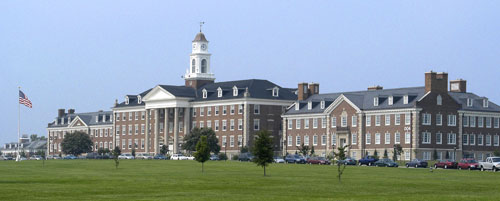
A new year and new challenges arise for science at BARC, Henry A. Wallace “National” Beltsville Research Center (BARC) and the National Agricultural Library (NAL) at the Abraham Lincoln Building
The Henry A. Wallace Beltsville Agricultural Research Center10300 Baltimore Ave., Beltsville, MD 20705

Here are the issues of concern and the request for their solution.

1. The people of the United States and the world are being told that we can no longer afford to continue research in long term critical areas of knowledge. The scale insect position systematist within BARC is now empty due to retirement, and the agency’s inability to rehire because of lack of funds. The National Agricultural Research Alliance - Beltsville strongly urges finding a $500,000.00 appropriation to continue this work. Scales are some of the most important invasive insects that damage a lot of our crops and also come ofter through imported agricultural products.

The hemlock woolly adelgid, Adelges tsugae, has been in the United States since 1924.

2. In May 2008 some programs in climate change research will be closed down, at a time when we are having a national and international important and urgent conversation on what are the impacts of, and responses to global climate change. Crucially needed on-going research is marked for termination in the President’s proposed FY 2009 budget. This needs to be avoided, and the program should be continued with its current funding and, if possible, receive more funds.

3. We fully support redirected research in the FY 2009 President’s budget including the proposed relocation staff and program from the Grand Forks Human Nutrition Research Center to Beltsville.


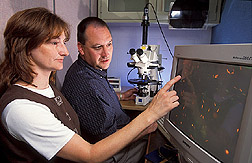
At the Biotechnology and Germplasm Laboratory in Beltsville, Maryland, physiologists Julie Long and Kurt Zuelke evaluate whether turkey sperm are alive or dead in studies to improve the lifespan of stored turkey sperm. Photo by Stephen Ausmus.

4. There is much about the President’s budget to be concerned. The Animals Biosciences & Biotechnology Laboratory (ABBL) at ARS-BARC research mission is to improve the genetic, reproductive, and feed efficiency of livestock and poultry. It is proposed for elimination. A dedicated staff of 32 employees, of which 13 are research scientists, are addressing a number of cutting-edge research issues such as using pig embryonic stem cells to enhance disease resistance in pigs and for clinical use in human liver rescue devices; designing novel antimicrobial proteins for treatment of human (methicillin-resistant staph aureus) and animal (bovine mastitis) diseases; and identifying genetic markers to reduce fetal pig mortality. This cutting-edge work is well regarded in the greater scientific community. Loss of this funding will essentially close out the only research of this type in ARS. It has been suggested that a reason for the proposed closure is inadequacy of facilities. In the judgment of highly qualified scientists, the inadequacy of facilities is not an issue. The research in this laboratory is both basic and applied and is valuable to all of the animal industries. The research addresses the very issue of genetic improvement of animals for those traits that are most desirable to consumers and profitable for producers. In addition, this research has proven to be very valuable to the biomedical community because the information obtained is useful to promote human health. Restoration of funding, $8,401,123.00, for this invaluable research is critically needed.

4. The ARS- BARC Biomedical Materials in Plants program’s elimination is proposed. Plants can be used as factories to manufacture vaccines and other pharmaceuticals for animals and humans. This research focuses on development of tobacco as a crop with this beneficial use. The National Agricultural Research Alliance – Beltsville, NARA-B, urges the restoration of full funding in the amount of $1,808,253.00.

5. The timely and important work in the field of bioremediation of munitions storage sites and bombing ranges in parts of the U.S. have left huge tracts of soils and lands contaminated by highly toxic residues from explosives like TNT. Those soils and lands now are limited because of their environmental damage for use in commercial or agricultural purposes. The funds support ongoing ARS research to determine if forage plants can remove TNT and its metabolites from contaminated sites. Beltsville is a world recognized leader in the field of bio-remediation. This work is not done anywhere else in ARS. The Alliance recommends funding of $118,167.00 for this research.

6. Foundry Sand By-Products Utilization is also cut in the President’s FY 2009 proposal to Congress. Waste sands from the metal casting industry are currently dumped in landfills. This project is working with industry on guidelines for beneficial uses of these sands. We recommend that this research continue and ask for $680,205.00 to be restored.

7. Poultry Diseases and the protection and security of our food chain are at risk with the proposed elimination of on-going research. Coccidiosis, a parasitic poultry disease, costs the industry almost $3 billion per year. This research focuses on understanding the genetics of both the parasite and the host chicken to identify targets that will allow better disease prevention and control. We recommend $434,934.00 be restored so that this research continues.


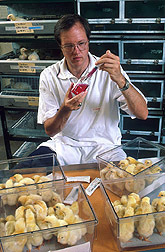
Microbiologist Harry Danforth and other scientists laid groundwork for development of animal disease vaccines, including one for chicken coccidiosis. Photo by Keith Weller.

8. Funding for Potato Diseases programs are used for research activities on genetic improvement of potato and for diseases of potato. While a small amount of money, these funds are used to supplement ongoing efforts in this important area. We recommend that this research continue to be funded in the amount of $64,545.

The redirected Research budgetary items listed here have not appeared in testimony of previous years. In terms of overall ARS-BARC funding, they are revenue neutral. Essentially, these are “new” programs replacing similar but lower-priority, on-going programs that would be closed out. Ideally, all the research programs, new and old, would continue. All are important lines of research, and we would prefer to see new funding rather than redirection. Nevertheless, BARC can manage within these re-directions if there is no option. We strongly support funding for these research programs.

9. Crop Health - $947,322.00
10. Obesity Prevention Initiative - $1,937,649.00 11. Food Safety - $1,045,629.00
12. Crop Genetic Improvement - $ 938,385.00

13. Meanwhile the National Gardens and Education units, Congressionally mandated programs at the National Arboretum, are proposed to be cut by $2,000,000.00.


14. These programs have much in common with the National Agricultural Library (NAL), which is facing it's own funding problems and challenges. The Alliance concurs that funding for the NAL's AWIC and Special Collections budget must not be cut. The Alliance supports the arguments put forth in this letter sent to Representative DeLauro from Dr. Norma Kobzina, President, USAIN 2007-2008; Librarian, Marian Koshland Bioscience and Natural Resources Library, U.C. Berkeley.


10 March 2008
The Honorable Rosa DeLauro,

Chairwoman, House Appropriations
Subcommittee on Agriculture, Rural Development, Food and Drug Administration and Related Agencies 2362A Rayburn House Office Building Washington, D.C. 20515-0616

Re: Support for the USDA National Agricultural Library (NAL) in the
Proposed Fiscal Year 2009 Budget

Dear Madam Chairwoman:


We are writing on behalf of USAIN, the United States Agricultural Information Network, to ask for your support as you and your colleagues begin the hearings on the proposed Fiscal Year 2009 appropriations for the U.S. Agricultural Research
Services (ARS) and the Department of Agriculture. We appreciate the efforts you
have made in ensuring that the USDA and related agencies are able to meet the
priorities of the new Farm Bill and to provide funding for research, safety for
consumers, and resources for the farming and rural communities.

USAIN is an organization of more than 100 agricultural librarians and information
specialists, with members from five countries on three continents and more than
40 U.S. states. We work at land-grant and other universities, government agencies including the National Agricultural Library, and non-profit organizations. It is the work of USAIN members in their state and regional institutions (land-grant colleges and universities), Cooperative Extension units, as well as the National Agricultural Library, to facilitate access to key historical data and reports as well as to the latest scientific information upon which agricultural research is based.

We are concerned that continued cuts in the budget, and the re-distribution of funding, will make it more difficult than ever to make sure that information resources are readily available to researchers, educators, agricultural extension agents, and others involved in the agriculture-related sector, as well as members of the general public. Immediate access to complete and current research regarding issues of national importance such as food security, renewable energy, and the health of our natural resources is absolutely vital for the future health and economic well-being and of American citizens. Federal support for agricultural research at universities and colleges has been steadily decreasing, and funding for the National Agricultural Library and significant collaborative initiatives such as AgNIC (the Agriculture Network Information Center) has remained flat since 1995. The President's FY 2009 Budget Estimate includes $18 million for the USDA National Agricultural Library, a $4 million reduction from the FY 2008 Budget estimate, and $6 million less than the FY 2007 actual budget for the Library.

Significant changes proposed by ARS include redirecting $993,000 in
AWIC funds to support NAL participation in a new digital portal for veterinary medicine; eliminating funding for the National Agricultural Law Center, the nation's leading source for agricultural and food law research and information, which complements and works with NAL, which does not cover these areas; and most importantly, reducing funding for non-digital content/document delivery/Special Collections by $3,000,000.

"Plate Six, Lepidopterous Archippus" The Natural History of the Rarer Lepidopterous Insects of Georgia By John Abbot and James Edward Smith London, 1797

As a national library, the print collection is core to researchers and the agricultural history of the nation. It is this reduction of $3,000,000 for the print collections that is of immediate concern. In FY 2007, NAL document delivery services filled 29,000
requests from the NAL collection for materials which were available in print-only--not available electronically. In FY 20009, such requests for print-only materials would not be filled.

There is no question about the need for continued, increased support for the creation and delivery of digital content, and the need for more sophisticated systems for access based on new user requirements. NAL has been a leader in facilitating the development of innovative digital projects of national and international importance, such as AgNIC. We applaud the efforts to improve the quality of AGRICOLA, an electronic index to agricultural literature, and their creation of Digitop which provides desktop access of research materials to USDA staff worldwide. New web portals such as nutrition.gov and invasivespeciesinfo.gov have proven to be invaluable sources of free information for consumers and researchers alike. However, in the United States almost half of the population continues to rely on printed resources, without access to the Internet. Especially in rural communities, including farms and ranches, those who need the information rely heavily on printed leaflets, handbooks, books and trade journals. It is unlikely such material will be made available electronically in the immediate future. At the same time, it is not clear that agricultural information received from worldwide sources will become digitized in a timely fashion.

The ramifications of the proposed reductions or redirections of NAL funding include not only the inability for NAL to fill requests for materials available only in print, but the complete cessation of book and journal purchases, and the inability to catalog and make available print materials already acquired. In addition, cancellation of the receipt of free publications from the U.S. and other countries would have a major impact. In recent years the USDA required all USDA-authored publications to be delivered to the NAL; but what good is this if there no money to catalog them and make them findable? Publications coming from scholarly societies in addition to those from commercial publishers will no longer be available to USDA researchers, and in some instances to researchers, educators and librarians throughout the United States who utilize the collections housed at NAL.

Libraries throughout the United States rely on the NAL as its primary national depository for agricultural literature, in the same way that other libraries and the public rely on the Library of Congress or the National Library of Medicine. It should be noted that the materials collected by NAL are not frequently held in the Library of Congress. Universities and other institutions are also faced with budget cuts, and increasingly, have depended on regional and national partners to ensure that our patrons can access these shared print resources. USDA staff without ready access to the ARS field libraries or university collections would be further hampered in their research.

In addition, one of the more severe impacts of the ARS proposal on researchers, scientists, educators and the general public is the suggested elimination of the NAL Special Collections Program. These collections are what makes the NAL unique and valuable for U.S. citizens, with materials in several subject areas-- entomology, plant science, and pharmacology, among other disciplines. Examples of the materials housed there, which are in constant need of preservation, include early herbals, heirloom plant varieties, the origins of invasive species, and the history of agriculture itself. Seed catalogs are another example of the unique collections housed at NAL. While there has been an attempt to preserve the most significant literature of agriculture and rural life, through grants such as those from the National Endowment for the Humanities ( a program formulated under the auspices of USAIN), the major portions of the Special Collections at NAL are often too brittle to be included in such preservation projects. A high percentage of these special collections have yet to be processed, and it was only recently that there was funding to improve the climate and physical space that is essential to maintain these rare items. Current efforts by the NAL working with several publishers who use the images and information will be difficult or impossible to continue if this funding proposal is approved. We fear the loss of these valuable, archival collections.

We recognize the difficulties you face in balancing budget priorities. However, NAL cannot continue to be a National Library if access to the vast print collections, and the ability to acquire, process and preserve, and make accessible online this material, is taken away. The vision of the National Agricultural Library and cooperating institutions is to create a comprehensive, collaborative information system, and we hope that you will support our efforts to achieve this vision.

We would be happy to address any questions you might have and to provide further input on this issue. We thank you in advance for your consideration.

Respectfully Submitted by
the USAIN Executive Council on behalf of the U.S. agricultural information
community. Dr. Norma Kobzina, President, USAIN 2007-2008Librarian, Marian
Koshland Bioscience and Natural Resources Library, U.C. Berkeley; Heather K.
Moberly, Past President, USAIN 2007-2008Associate Professor and Veterinary
Medicine Librarian at the Center for Veterinary Health Sciences at the Oklahoma
State University; Katie Newman, President-Elect, USAIN 2007-2008Associate
Professor and Biotechnology Librarian, Biotechnology Information Center,
University of Illinois


Maryland’s Congressional leaders, Mr. Hoyer, Ms. Mikulski, and Mr. Cardin are working to protect the scientific programs at BARC. In January 2008, the Maryland delegation asked USDA for a plan for the operation and direction of thetwo entities.

The Alliance is a full time volunteer effort with no funding. We need your help; please write to your Congress person and Senators asking them to support science at BARC % NAL.

Thursday, October 11, 2007

Feathers to Plastic BARC strikes again

Today, I was able to watch a demonstration at USDA/BARC which turned poultry feathers into biodegradable plastic. Think a moment of the possibilities, and then note all my postings on the lack of support for this type of research. From climate change to food safety, fundamental science keeps sustaining our quality of life, and we keep through our benevolent polticians benigningly allowing it to fade away. If you are interested in helping and or supporting this kind of research, please write to me: JPETER@BEHNKES.NET

Invasive Species Complexities: A Wicked Inconvenience
Invasive Species (Kudzu) Meets Fox News
National Agricultural Research Center; Invasive Species, Climate Change & Poison Ivy
BARC: Funding for Research Continues to Fall
BARC-National Agricultural Research Center Alliance NARAB
Homeland security; E. coli, and diminished funding & BARC

Monday, October 08, 2007

Invasive notes "biofuels as weeds"

copied from: aliens-l@indaba.iucn.org

Many plants being promoted as biofuels are serious weeds that should not be grown, a new assessment by the Invasive Species Council has found. In a report released at the Greenhouse 2007 climate change conference in Sydney, the Invasive Species Council explained that some biofuel crops “have bad reputations as weeds without any proven value as crops.” Seven plants considered promising as biofuels are banned as noxious weeds in parts of Australia: jatropha, spartina, castor oil plant, Chinee apple, olive, willows, and poplars. Two species – giant reed and spartina – appear on the IUCN’s ‘List of 100 of the World’s Worst Invasive Species'. Giant reed is now on trial as a biofuel crop in South Australia and in Florida, despite the enormous weed problems it causes around the world. In California alone, many millions of dollars are spent each year destroying it. “We should not try to solve one environmental problem by creating another,” said ISC spokesman and report author, Tim Low. “These plants have no proven value as biofuel crops but bad reptuations as weeds.” Jatropha is widely promoted as a “miracle crop” but there is no technology for harvesting its seeds. It is closely related to bellyache bush, one of the worst weeds of farmland in northern Australia. “The naïve enthusiasm shown for jatropha and other weedy biofuel plants recalls the enthusiasm shown for cane toads in a past age,” said Tim, “and the outcome may be similar.” “We should be very wary of over-hyped agricultural ventures, as past experience with golden apple snails and deer farming has shown." Any plant proposed as a biofuel should be assessed first for its environmental impact. Governments and biofuel experts have largely failed to acknowledge that the weed risk exists, an unacceptable situation. The report can be downloaded from the Invasive Species Council website at http://www.invasives.org.au/issues/biofuels.html

From: Tim Low [mailto:Tim.Low@uq.net.au]
Sent: Monday, 8 October 2007 12:18 p.m.
To: aliens-l@indaba.iucn.org
Subject: [Aliens-L] Biofuels as Weeds

Sunday, September 23, 2007

Invasive Species Complexities: A Wicked Inconvenience

As I try to connect the various components and discussion that comprise the world of invasive species, I find myself more and more investigating areas of knowledge seemingly far removed from the world of traditional ornamental gardening. From my postings entitled: National Agricultural Research Center; Invasive Species, Climate Change & Poison Ivy and Invasive species, BARC, Kudzu and Bio-fuel to those on wicked problems: Invasive Species; Wicked Inconvenience: part two and Inconvenient question: Invasive species.

Now after a casual morning of web surfing I find: Recent developments in the science and management of invasive alien plants: connecting the dots of research
knowledge, and linking disciplinary boxes: ”Many new or less well-known aspects of plant invasions were discussed. For example: (i) The complexity of real-life systems was highlighted using quantitative food-web models. These show that changes in species composition caused by plant invasions could have serious consequences for higher trophic levels, and may greatly affect organisms at levels that have no direct connection with the invasive plant species in question. (ii) Evidence was presented of what was dubbed ‘invasional meltdown’, meaning synergistic interactions between invasive species that promote further invasions and exacerbate their detrimental effects. (iii) Particularly alarming was the revelation that various elements of global change (global warming, elevated atmospheric CO2, nitrogen deposition, habitat fragmentation) are already interacting to worsen the impacts of plant invasions. Some experimental results suggest that elevated CO2 levels have already had a marked effect on traits of some key invasive species in North America: increased biomass production, expanded leaf area and spininess, and enhanced pollen loads.1 All of these traits, alone or in combination, affect how these plants influence native species, and the invasibility of the ecosystems they occupy.”

The intertwined nature of two co-equal, co-evolving, and related problems is a key defining feature of a classic wicked problem. My efforts, which try to bring the public’s attention to inadequate and falling funding for the National Agricultural Research Center in Beltsville, BARC: Funding for Research Continues to Fall, and to the companion agency, the National Agricultural Library, also come to mind, when I read this report on line. Trying to cobble together a stake-holder’s group on a no-budget, all volunteer basis to somehow prod our political leaders into funding and supporting work in not only invasive species, but feathers to plastic work, agricultural genetics, and remote sensing to name a few continues to be a challenge.

Given what I know about the National Library’s funding crisis, it is possible that someday in the near future, work like Dr. Ziska’s will possibly be funded by a foreign government grant, and the resulting paper will be unavailable to the congressionally mandated library, because they no longer have the budget to buy foreign scientific journals. The library needs around 3.8 million dollars to get back into the foreign journal subscription process, but I am having trouble getting a group of stake-holders interested in the problem. The National Library as of now can no longer afford foreign scientific journals.

And if this seems rather straight forward, just try to get funding to upgrade building that are over 70 years old. Vital to the study of invasive species is the science of systematics and the collections in some cases of which are over a century old. You cannot begin to speak of a species, if you cannot identify it. We should be working to create a national systematic building and center to house our endangered collections; instead we reduce their funding and hope that someone somewhere will have the presence of mind to take care of them even as universities try to unload them.

All of this is related to the difficulty of getting funding for invasive species and climate change. Even though there is a National Invasive Species Council, without the funding to actually encourage science and action, the power is limited to attempting to be a facilitator of communication of ideas and concept for federal agency competition for limited funds.

In some ways, this, then, is the challenge of invasive species, the wicked inconvenience; that each time I think I have a understanding of the stakeholders and their particular desired result, I find that any ability to focus is diffused and that since in the end all of us are stake-holders, I have no stake-holders to lobby and influence the funding process. The ever changing nature of knowledge and science means the end game remains in motion and long term, distinctly at odds with our craving for short term solutions that take place within a financial reporting cycle of a year or less. Attempting to get funding for projects that last a generation run counter to our present desire for instant success.

Sunday, July 01, 2007

National Agricultural Research Center; Invasive Species, Climate Change & Poison Ivy

The work of the people and programs of the Beltsville, Henry A. Wallace National Agricultural Research Center touches everything from food safety to the changing environment. For those interested in the world of invasive species and the intersection of native challenges and exotic problems, the research, which is threatened by the chronic under-funding for USDA/ARS Beltsville over more than a decade, is an invaluable tool in the struggle to create a policy of action.

The land mangers and keepers of natural areas wage constant war on exotic weeds, which they have labeled invasive species. The general property owning or using public battles aggressive plants, insects and diseases which threaten personal health or security, as well as traditional notions of beauty and order. Explaining that the native poison ivy, (Toxidendron radicans), is not invasive in the mid Atlantic is a semantic dialogue which, for too many, is a squabble over distinctions not readily understood. [pictures from my garden]

Because invasive species issues are connected to issues of environmental and climate change, the wicked inconvenience is that solutions which are single objective defined such as the prohibition of sale of non natives, leads to confusion and adamant opposition. The general public wants as its priority a safe, secure, serene, and, syntactically easy to understand landscape; the managers and wardens of natural areas seek a working, self-sustaining eco-system.

The cry for native only, begs the question, native to when and where; the change in climate may overwhelm the answer. And so the work of Dr. Zizka, and those committed to the exploration of our changing world is of national importance. If a native plant, which by definition is a constituent part of a greater whole and therefore deserves and needs to be allowed to live, is at the same time growing in its ability to cause personal harm, we face a disconcerting controversy which muddies the over all invasive species conversation.

My conversations surrounding invasive species inevitably raise the question of plant adaptability and the question of carbon dioxide concentration change on the biota of a eco-system. Thus, when presenting invasive species issues to the general public, I am challenged to juggle harm to natural areas, change in plant diversity, climate change and its impact on the presumption of native, and the traditional definition of a weed. Because each stakeholder subliminally understands the complexity of invasive species issues, they result inevitably to using their goals to define for themselves what an invasive species are. Hence, for the traditional majority gardener, poison ivy is an invasive species, and English Ivy an ornamental workhorse. For the managers of natural areas, the reverse, of course, is true.

And so the work of BARC, continues to provide information necessary to the development of strategies to protect ourselves in the here-and-now and in the not-so-distant future. In order to grasp the hierarchies of complexities generated by the small/quick changes we see in our gardens and properties and, to which we feel we can react with some confidence, and the big/slow changes, which happen beyond our life horizon, we are dependent to some extent on the work performed at the national agricultural laboratory.
How will the public react to the following information, which they will experience directly and painfully when they work or play outdoors?

Although the data on poison ivy come from controlled studies, they suggest the vexing plant is more ubiquitous than ever. And the more-potent oil produced by the plants may result in itchier rashes. "If it's producing a more virulent form of the oil, then even a small or more casual contact will result in a rash," says Lewis Ziska, a plant physiologist for the U.S. Department of Agriculture in Beltsville, Md.
The latest research, led by Dr. Ziska, studied poison ivy plants in Maryland under different levels of carbon-dioxide exposure. One group of plants was exposed to about 300 parts per million of carbon dioxide -- about the same level found in the atmosphere in the 1950s. Another group was exposed to 400 parts per million of CO2 -- about the same level in the atmosphere today.
After about eight months, leaf size, stem length and weight and oil content of the plants raised at current carbon-dioxide levels were, on average, 50% to 75% higher than the plants under the 1950s conditions, according to the study, expected to be published this year in the journal Weed Science. Not only did the higher CO2 level double the growth rate, but it made for hardier plants that recovered more quickly from the ravages of grazing animals.
[Climate Changes Are Making; Poison Ivy More Potent; June 26, 2007; Page D1]

Monday, June 25, 2007

Invasive species, BARC, Kudzu and Bio-fuel

Sooner or later, I am asked what the purpose of invasive species control and eradication is; why the furor, what is the ultimate end game? This line of thinking about invasive species goes to the heart of a wicked problem's fundamental properties: that interest groups, overwhelmed by the complexity of the issue, define the issue in terms of their own end goal. Dr. Anna Sher writes that “While tamarisk control often appears to be our focus, we must not lose sight of the real goal: ecosystem restoration, of which removal of tamarisk is only one of many components.” [Tamarisk Coalition]

I think we can enlarge her purpose when the work of Dr. Lew Ziska, Crop Systems and Global Change Laboratory, USDA-ARS, Beltsville, MD is introduced. Assuming we can get Congress to pay attention, Dr. Ziska proposes to: “Determine the value of Kudzu as a biofuel crop, develop harvesting and handling procedures needed as a feedstock for gasification and/or ethanol fermentation.” He is in no way suggesting the planting of kudzu, but given that kudzu cover about 8 million acres of marginal, unproductive and abandoned farmland in the eastern United States, he sees a positive eradication and the restoration of this land to either environmental restoration using natives or to continued food and or fuel production using non invasive agricultural crops.

Here from an extract prepared for educational use, he writes that “Mature stands usually have a plant every 1 to 2 square feet and may contain tens of thousands of plants per acre.
Production of biofuels has primarily focused on crop species that are high in sugar and starches since these materials can be easily converted in ethanol. High biomass plants are being considered as an energy feedstock for gasification, in the short-term, and as a feedstock for cellulosics ethanol production in the long-term. Kudzu roots may be as high as 30% starch, and above ground leafy production may be both a feedstock and source of cellulosic ethanol.”

And just to be absolutely clear let me reprint his policy statement: “Policy. Establish an incentives program for the utilization of Kudzu for biofuels that includes a program to re-establish Kudzu-free acreage to be planted to a more sustainable, non-invasive, bioenergy crop.” Here then is a direct, possibly for profit reason to eliminate kudzu which does not require a complicated understanding of the relationship of our well being to natural areas, but one that is easily understood. Remove the aggressive plant, keep corn in the food chain replace the invasive species with agricultural crops which can be maintained and controlled, most likely with those which do not need the rich fertile soils that corn wants.

The mass migration of farmers from the fields of the south to cities in the middle part of the twentieth century left millions of acres unworked and open to invasion. Now we need these fields and the plants which they could support and projects such as Dr. Ziska’s enhance the definition of invasive species.

If you are interested in this project please write your congressperson; ask them to support funding. Remember too that this request is what we call pork, an ear-mark, if you will. Do not be dissuaded; there are good cuts of pork and then there are those cuts open for discussion. One man’s needed project is another’s bridge to nowhere.

Thursday, April 12, 2007

BARC: Funding for Research Continues to Fall

For update on the funding situation as of March 2008 please see:

BARC & NAL: Funding challenges continue

It has been a while since I wrote (Monday, October 09, 2006, Homeland security; E. coli, and diminished funding_ & BARC) about the Henry A. Wallace ”National” Agricultural Research Center at Beltsville, BARC. The funding season is in full swing, and the research is in full need of congressional support. Once again cuts are proposed which total over 5 million dollars. We cannot continue to make a thousand cuts quietly over decades and expect to keep the world class research.

Today work on E coli which I wrote about a few months ago is being recommended for budget reduction as are many other programs listed below. Along with several other interested parties, a new national stakeholders alliance has recently been formed to begin reversing the financial assault on research which directly affects our quality of life, The National Agricultural Research Alliance – Beltsville will begin the work of educating decision makers and the public on the benefits of food safety and other related agricultural needs .

The list below is taken from testimony supplied to Congress and gives a look into the trouble ahead. The first part is good news which consists of White House proposal for new research. However what one hand giveth, the other taketh away, as seen in part II below. I would be interested in any comments or opinions on continuing ARS research.

Part I. New Research Items Proposed in the FY08 Budget

Obesity Prevention Research, $1,150,000: Obesity is a growing health menace in the United States. Today, an estimated 64 percent of all Americans are overweight or obese. Obesity has been linked to heart disease, stroke and cancer, and thus to spiraling health problems and rapidly rising health care costs. These funds would provide critical support for BARC and its collaborators to pursue vital clinical and translational research on the efficacy of the Dietary Guidelines and to develop improved strategies for preventing unhealthy weight gain in the diverse American population. We urge support for this research.

Food Safety, $708,000: Maintaining consumer confidence in the safety of the U. S food supply is a primary goal for producers and marketing managers. Recent isolated food safety incidents highlight the need for research to identify points in the food chain where food can become contaminated by chemical residues, pathogenic bacteria or toxins that are capable of causing severe illness, even death in worst case situations. These funds provide the resources to examine production systems and pre-harvest crop management practices thoroughly, especially for leafy vegetables and organic produce. We endorse full funding for this work.

Research to Support the Animal and Plant Health Inspection Service, APHIS, Citrus Canker and Ralstonia, $850,000: APHIS needs effective diagnostic tools to identify emerging citrus and tree fruits diseases, to confirm infections in epidemiological studies, and to carry out regulatory programs. This research also strengthens the National Citrus Pathogen Collection, which is essential for effective citrus disease research. Some of this research may be directed to Ralstonia, a bacterial pathogen not known to occur in the United States. Ralstonia causes wilt in potatoes, tomatoes, peppers, eggplant, and other crop plants. APHIS and ARS need to design survey protocols to detect and track plant disease agents and to identify crop pathogen threats. Research on diseases of citrus, tree fruits, and other crops is extremely under funded. We strongly urge support for strengthening plant disease research and for supporting the action mission of the Animal and Plant Health Inspection Service.

Emerging Diseases and Animal Health, $1,165,000: Globalization of trade and the growing movement of people and goods around the world steadily raise the threat of disease outbreaks in the United States. Diseases such as avian influenza, bovine diarrhea, transmissible spongiform encephalopathies, and porcine reproductive and respiratory disease are among many such disease threats. Effective control strategies require a more complete understanding of not only the basic biology of pathogens and their mode of transmission but also of the animal's immune system for resisting infections. BARC has one of the country’s premiere groups of scientists engaged in livestock immunology research. This funding would strengthen their research effort to more fully unravel the complexity of the animal's immune system and protect the health of U.S. livestock. This research is vital to advancing our understanding of livestock immunology, and for protecting and improving animal health. We support full funding for these studies.

Emerging Diseases of Livestock, $195,000: This research is vital to further understanding genetics and genomics methods to improve disease resistance in livestock. We recommend full funding.

Emerging Diseases in Crops, $500,000: We confirm and support the proposal to develop diagnostics for rapid, practical, and specific identification of pathogens. This is an under funded research area, and we recommend full support.

Soybean and Wheat Stem Rust, $300, 000: This goal here is to identify and incorporate diverse sources of genetic resistance into new grain and soybean varieties and germplasm. We fully support this research.

Plant Introduction Stations and the National Plant Germplasm System, $500,000: These funds are necessary for making germplasm and associated information more readily available to research programs and user stakeholders. These funds are needed to support the activities of the Germplasm Resources Information Network, or GRIN, which provides germplasm information about plants, animals, microbes and invertebrates. We recommend full funding.

Specialty Crops Genetic Resources, $250,000: These funds will provide floral and nursery plant research to support the research mission of the U.S. National Arboretum. Full funding is recommended.

Part II. Now we turn to the urgent need to continue support for specific research areas that the Congress has mandated at BARC in previous fiscal years. These mandates address research that has enormous national impact. We list them here with brief descriptions and our recommendations for continued funding.

Dairy genetics: For over 75 years, the Animal Improvement Programs Laboratory has created statistical genetic predictions to aid the dairy industry in identifying the best bulls for dairy breeding. Genetic improvement in dairy cattle has steadily increased milk yield per cow and feed efficiency (milk produced per pound of feed) over many years. The result is lower milk prices for consumers and less animal waste to contaminate the environment because fewer cows are needed to produce the nation’s milk supply. We confirm that this mission critical research should continue.

Barley health food benefits: Barley contains soluble fiber compounds, called beta-glucans, that are beneficial for health. Beta-glucans can lower cholesterol and improve control of insulin and blood sugar. These funds support human-volunteer studies designed to help us better understand how barley could be used in a healthful diet to reduce the incidence of chronic disease. We recommend continued support.

Biomineral soil amendments for control of nematodes: Plant nematodes are microscopic worms that feed on the roots of plants. Nematodes can cause substantial losses in crop yields. This research focuses on using such industrial byproducts as environmentally benign soil additives for controlling nematodes. We recommend funding for these promising approaches.

Foundry Sand byproducts utilization: Waste sands from the metal-casting industry currently are dumped in landfills. This project is working with industry on guidelines for beneficial uses of these sands. We recommend continuation.

Poultry disease (avian coccidiosis): Coccidiosis, a parasitic poultry disease, costs the industry $2-3 billion per year. This research focuses on understanding the genetics of both the parasite and the host chicken to identify targets that will allow better disease control. We recommend this funding.

Biomedical materials in plants: Plants can be used as factories to manufacture vaccines and other pharmaceuticals for both animals and humans. This research focuses on development of tobacco as a crop with this beneficial use. This research should continue.

National Germplasm Resources Program: Sources of germplasm for all agricultural crops are maintained either as seed or live plant material at several locations across the country. Much of this germplasm is the result of plant exploration around the world. This group maintains the computer database that indexes all crop germplasm in our repositories with critical information as to where it was obtained, the specific scientific identification, and information on useful traits for plant breeding. We strongly support continued funding for this mission-critical program.

Bovine genetics: This research focuses on bovine functional genomics, especially for dairy cattle. Scientists are identifying specific genes for quality traits such as easier calving, higher milk production, and resistance to mastitis. We recommend this funding.

Minor-use pesticides (IR-4): “Minor-use” pesticides are those that are used on crops such as fruits and vegetables that are not one of the “big four” crops like corn, wheat, and soybeans, and cotton. Because markets are much smaller than for major crops, chemical manufacturers have little incentive to obtain all the safety data needed to obtain EPA registration for pesticides used on minor crops. Nevertheless, producers of minor crops find certain agrochemicals to be essential. This project produces the data needed for EPA registration of minor-use pesticides. We recommend continued funding.

National Nutrition Monitoring System: Scientists at BARC have the unique responsibility of carrying out the national surveys of food consumption by individuals. This is now done in collaboration with HHS’s health surveys. BARC scientists also maintain the National Nutrient Database, which includes information on 126 nutrients in thousands of foods. This work supports the school lunch program, WIC, Food Stamps, senior nutrition programs, food labeling, dietetic practices, and even the EPA. We urge continuation of this funding.

Coffee and Cocoa: Producers of chocolate candy are the single largest users of fluid milk, sugar, peanuts, and almonds in the United States. U.S. specialty coffee shop chains also are one of the major markets for fluid milk. Events that limit the availability of cocoa or coffee can have significant impacts on major U.S. commodity markets. Candy producers need a stable supply of cocoa, but smallholders in developing countries produce most cocoa. Several devastating diseases and insects threaten cocoa. This research is aimed at developing environmentally friendly ways to control pests and diseases. Some insects that threaten coffee are very similar to those that attack cacao, thus work on the two crops benefits from being together. We recommend continuation of this funding.

Johne’s disease: Johne’s disease is a contagious bacterial disease of the intestinal tract of ruminants. It occurs most often in dairy cattle, causing weight loss and diarrhea. Nearly one-fourth of dairy herds are infected. Producers lose $54 million annually from reduced milk production. The disease is spread in manure. This research focuses on disease control. We recommend continuation of this funding

Food safety—listeria, E.coli, and salmonella: Food-borne illness annually costs $3 billion in health-care costs, and annually costs the economy up to $40 billion in lost productivity. This research focuses on diagnostics for food-borne pathogens, and on ways to control pathogens in fruits and vegetables. We recommend continuation of this funding

Weed management research: All farmers must contend with weeds. For organic farmers, weeds are the single biggest challenge to crop production. This research, in collaboration with the Rodale Institute and Pennsylvania State University, focuses on developing systems for controlling weeds in organic production systems. Organic crop production was valued at $400 million per year in the 2002 Census of Agriculture. These research funds will improve non-chemical weed control.