Showing posts with label ARS. Show all posts

Tuesday, March 24, 2015

Fiscal Year 2016 Outside Witness Testimony prepared for U. S. House of Representatives Appropriations Committee, Subcommittee on Agriculture, Rural Development, Food and Drug Administration, and Related Agencies March 23, 2015

James D.  Anderson, Ph.D., President, Friends of Agricultural Research – Beltsville, Inc. (farbbusiness@yahoo.com)

Fiscal Year 2016 Outside Witness Testimony prepared for U. S. House of Representatives Appropriations Committee, Subcommittee on Agriculture, Rural Development, Food and Drug Administration, and Related Agencies

March 23, 2015
Mister Chairman and Members of the Subcommittee, thank you for this opportunity to present our statement supporting funding for the Department of Agriculture’s Agricultural Research Service (ARS), and especially for its flagship research facility, The Henry A. Wallace Beltsville Agricultural Research Center in Beltsville, Maryland.  Overall, the facility includes the research operations of the Beltsville Agricultural Research Center and the Beltsville Human Nutrition Research Center. We strongly recommend full fiscal-year 2016 funding support for the research programs of The Henry A. Wallace Beltsville Agricultural Research Center.
Beltsville research has consistently led the way to agricultural progress for well over a century. Whether measured as crop yield per acre, milk and meat yield per animal, or average output per farm worker, the productivity of U.S. agriculture is among the highest in the world. Economic analyses have found consistent evidence that dollars invested in agricultural research return high yields per dollar spent. Net social returns from agricultural research in the United States are estimated to be in the order of 35 percent or more annually. Those returns include benefits not only to the farm sector but also to the food industry and consumers in the form of abundant commodities and food at affordable prices.  Still at the threshold of its second century, The Henry A. Wallace Beltsville Agricultural Research Center stands unequalled in scientific capability, breadth of agricultural research portfolio, and concentration of scientific expertise.  Its location and close proximity to other Federal research agencies, the University of Maryland and other major research and educational institutions provide a rich opportunity for joint research activities and the leveraging of resources.
We turn now to selected items within the President’s FY2016 budget request. We are especially pleased that the President’s budget includes $37.1 million to renovate and modernize of Building 307, a recommendation that we also included in our testimony for the Fiscal Year 2015 budget.
The Henry A. Wallace Beltsville Agricultural Research Center has moved successfully in recent years to consolidate space and reduce costs.  Further progress will be vastly aided by the renovation of Building 307.That valuable building was vacated some years ago because of deterioration. The proposed funding will support the design and construction of laboratory space and offices needed to consolidate research now housed in small, aging, energy-inefficient buildings on the research campus. Approval of funding for this purpose is highly recommended.
We also are very pleased the President’s Fiscal Year 2016 budget includes increases in critically important research initiatives, which would lead to creating new jobs, enhancing American agriculture competitiveness in the global economy, assuring future food security, protecting crops and animals from diseases and reducing their vulnerability to climate change, while improving the economic and environmental sustainability of American agriculture.   The scientists of the Henry A. Wallace Beltsville Agricultural Research Center are recognized world leaders in the scientific disciplines that are necessary to successfully execute the President’s proposed research initiatives.  Specifically, we would like to highlight the following initiatives which would enhance the Center’s research programs. 
Translational Livestock Genetics:
The proposed budget provides $854,450 of new funding to intensify animal production using modern high throughput trait analyses and advanced genomic tools. The goal is to improve genetic selection of cattle and other ruminants through integrating traditional selection methods with modern DNA marker-based tools. New lines of animals would have greater growth, enhanced adaptation to extreme environments, better survival, and greater fertility.  Other expected benefits are improved efficiency of nutrient-use in dairy cattle to lower feed costs and nutrient losses associated with milk production.    
Antimicrobial Resistance:
The budget provides $1,800,000 of new funding to protect public health by improving our understanding how antimicrobial resistance occurs in animals and the environment. Among expected benefits could be novel approaches to boosting animal natural immune systems for resistance to parasitic infections, gut stabilization against pathogens, or novel strategies using antimicrobial growth promoters to limit the consequences of host reactivity to pathogens, and to improve health. 
Improving Agricultural Sustainability:
A total of $900,000 in new funding is provided for the Henry A. Wallace Beltsville Agricultural Research Center to pursue research on benchmark watersheds, experimental pasture lands and research farms to strengthen the long-term Agro-ecosystems Research Network and to establish long-term experiments in agricultural sustainability. Using remote sensing, land surface modeling and ground-based observations, this research aims among other things to monitor the magnitude of agricultural drought and its impact on crop condition and yield as well as characterize the multiple-scale impacts of conservation practices on water quality. 
Combating  Antibiotic Resistant Bacteria:
The budget provides $900,000 of new funding to The Henry A. Wallace Beltsville Agricultural Research Center to investigate protecting public health by preventing antibiotic resistance. This research aims at developing genetic biotechnologies that include novel antimicrobials for improved animal health and product safety, also for using functional genomics to control disease in animals, particularly in poultry.  
Pollinator Health and Colony Collapse Disorder:
A total of $900,000 in new funding is requested to develop, in cooperation with
industry, best management practices for beekeepers. This research uses integrated laboratory and field approaches that among other things may lead to better diagnosis and mitigating disease, counteracting negative impact of environmental chemicals, and improved bee health through better nutrition.
Vertical Farming:
The budget has $264,546 of new funding to provide new methods and technologies for insect and disease control related to greenhouse production.     
Big Data:
The budget also requests $180,000 in new funding for the Center to create a new research project that will facilitate the creation of scientific networks with shared research strategies and build a linked data collection through the Long-term Agro-ecosystems Research Network. Big Data is an emerging scientific field fueled by advances in data collection, transfer, curation, sharing, storage, and visualization. Big Data makes it possible to analyze data sets that are too large for analysis with traditional data processing applications.  The benefits can be numerous. In the environmental sciences, this technology allows scientists to discover new correlations and trends that may make it possible, for example, to prevent water contamination or other undesirable environmental changes.   
In summation, Mr. Chairman, we re-confirm that The Henry A. Wallace Beltsville Agricultural Research Center has forged a well-earned, distinguished reputation for successfully translating basic research into agricultural and human nutrition solutions and advances that benefit all of society. Beltsville has become an indispensable national leader in the long agricultural research continuum that allows us to become ever-better stewards of land and water resources, to introduce new products based on agricultural commodities, and to make food and agricultural products more affordable, safer, and more readily abundant for all Americans. Again, we recommend full funding for research programs of The Henry A. Wallace Beltsville Agricultural Research Center.
Mr. Chairman, this concludes our statement. Thank you for consideration and support for the educational, research, and outreach missions of The Henry A. Wallace Beltsville Agricultural Research Center.
Sincerely,

James D. Anderson, Ph.D.

President, Friends of Agricultural Research-Beltsville

Tuesday, September 17, 2013

Beefsteak plant, (Perilla frutescens), a Growing Control Problem


Beefsteak plant flower
http://www.biosurvey.ou.edu/okwild/beefsteak.html
               Natural areas, parks and woods of the Lower Chesapeake Bay have yet another early detection of a non indigenous, alien species.  Perilla frutescens (L.) Britton 1894, [synonyms: Ocimum frutescens L.; Perilla ocymoides L.] beefsteak plant, has been found to be spreading beyond Maryland's cultivated, managed gardens and landscapes. Escaped from gardens in New York as early as 1898, it was reported as a weed of wastelands.[1]  Bernard McMahon, the great American horticulturalist, was selling Perilla seed as early as 1804.[2] Marc Imlay, the great weed warrior, has been weeding Perilla from parks in Maryland since 1998.[3]

               Beefsteak plant also known as Chinese basil; purple or perilla mint, is described on the Missori Botanical Garden website as

"an upright, bushy annual that is native from the Himalayas to Southeast Asia. It is related to coleus and basil. It has become a very popular foliage annual and salad herb plant. It grows to 1-3’ (less frequently to 4’) tall. Wrinkled, serrate, broad ovate, medium green leaves (to 4” long) are sometimes tinged with purple. Leaves are aromatic. Two-lipped nettle-like white flowers in spike-like inflorescences (to 4”) bloom at the stem tips in late summer and fall (August – October). Flowers are not particularly showy. This plant has escaped gardens and naturalized throughout many areas of the eastern and central U. S., including central and southern Missouri. Fresh leaves are used in Oriental cooking, salads, soups and as garnishes. Deep red leaves of some perilla varieties purportedly resemble the color of uncooked beef, hence the common name."

USDA Plants - spread of Purilla frutescens
http://plants.usda.gov/core/profile?symbol=pefr4
               Perilla frutescens is reported as invasive in DC, IL, MD, MO, PA, TN, VA,
and WV and occurring in all states east of Colorado, parts of Canada, as well as the State of Washington on the west coast (excluding, for now, the Dakotas). The Forest Service (USDA) is aware that beefsteak plant is often planted as showy ornamentals,  that

"may readily escape cultivation, spreading to disturbed areas where they disrupt native ecosystems. The species has toxic characteristics and very few predators. It is ordinarily avoided by cattle and has been implicated in cattle poisoning. Plants are most toxic if cut and dried for hay late in the summer, during seed production. One reason for beefsteak plants’ survival in pastures is that cattle avoid it. Sold as a salad plant for its dark purple foliage, this member of the mint family is extremely invasive by wind-borne seeds."[4]

Chinese basil or perilla mint - Perilla frutescens
http://cal.vet.upenn.edu/projects/poison/plants/ppperil.htm
               Purdue Extension Service website control recommendations include "...pulling or digging it up, mowing it, or using herbicides. 2,4-D, Milestone®, Forefront®, Weedmaster®, and glyphosate."  Dr. Imlay, however, notes an ominous sign that control of Perilla frutescens, as well as control of Japanese stiltgrass, Microsteigum virineum Camus 1921[1922], is becoming much more difficult. Imlay told me that he and his volunteers removed 100% of the beefsteak plants by hand pulling until 2010 when many newly emergent patches in open space and lightly shaded areas emerged. He also noted that  existing patches of Perilla frutescens  no longer declined by ~80 % each year in 'weeded'  sections of the park as they had in previous years. 

               "In 2010," Imlay said, " I switched to herbicide treatment and sprayed 20 gallons. A great reduction occurred in 2011 and I only had to spray 2.2 gallons along with modest hand pulling. However, in 2012 many new patches appeared, all of which were treated or hand pulled. But this year many, many new and expanded patches have appeared increasing the coverage of beefsteak plant from about 1/10 th acre to about 1/2 acre.  As of September 6 we have already sprayed 60 gallons and only sprayed about half of the beefsteak plant."

         While preventing and introduction is the first line of defense, even the best prevention efforts will not stop all harmful invasive species. In the case of beefsteak plant, however, preventing its introduction has been off the table for over 200 years. However using the tools of IPM (Integrated Pest Management), such as early detection and rapid response (EDRR), at a local level can greatly support effective management and even in some cases elimination. EDRR efforts increase the likelihood that invasions that can lead to establishment and spread of harmful species will be halted and eradicated. Once a species becomes widely established in an ecosystem, the only action possible is the partial mitigation of negative impacts. Based on the work of the ISAC/NISC EDRR Subcommittee, NISC has approved Guidelines for Early Detection and Rapid Response. 

Additional References
Ali, S.I., Raven, P.H. & Hoch, P., 2012. Flora of Pakistan Perilla frutescens (L.) Britton. tropicos.org Flora of Pakistan. Available at: http://www.efloras.org/florataxon.aspx?flora_id=5&taxon_id=200019964 [Accessed April 2, 2012].
Brenner, D.M., 1993. Perilla: Botany, uses and genetic resources. In J. Janick & J. E. Simon, eds. New Crops. New York, NY USA: John. Wiley & sons, inc., pp. 322–328. Available at: http://www.hort.purdue.edu/newcrop/proceedings1993/v2-322.html.
Britton, N.L., 1894. List of Pteridophyta and Spermatophyta growing without Cultivation in Northeastern North America. Committee of the Botanical Club American Association for the Advancement of Science, ed. Memoirs of the Torrey Botanical Club, 5(18), p.277. Available at: http://www.biodiversitylibrary.org/page/31876217 [Accessed April 2, 2012].
Britton, N.L. & Brown, A., 1898. An illustrated flora of the northern United States: Canada and the British possessions from Newfoundland to the parallel of the southern boundary of Virginia, and from the Atlantic ocean westward to the 102d meridian, C. Scribner’s Sons. Available at: http://books.google.com/books?id=uHdXAAAAMAAJ.
Brouillet, L., Coursol;, F. & Favreau, M., 2012. VASCAN. Database of Vascular Plants of Canada (VASCAN). Available at: http://data.canadensys.net/vascan/taxon/6430 [Accessed April 3, 2012].
Burton, R.H., 1933. Perilla frutescens; North America; USA; Connecticut; Middlesex County. Yale Peabody Museum of Natural History. Available at: http://peabody.research.yale.edu/cgi-bin/Query.Ledger?LE=bot&ID=irn 1385009&SU=0 [Accessed April 2, 2012].
Chen, J. et al., 1997. Plant Distribution and Diversity Across an Ozark Landscape, Available at: http://www.nrs.fs.fed.us/pubs/gtr/gtr_nc227/gtr_nc227_045.pdf.
Douce, G.K. et al., 2005. Invasive.org: a Web-based Image Archive and Database System Focused on North American Exotic and Invasive Species. In K. W. Gottschalk, ed. Proceedings, XV U.S. Department of Agriculture interagency research forum on gypsy moth and other invasive species 2004. U.S. Department of Agriculture, Forest Service, Northeastern Research Station.
Dӧnmez, A.A., 2002. Perilla: a New Genus for Turkey. Turk J Bot, 26, pp.281–283. Available at: http://journals.tubitak.gov.tr/botany/issues/bot-02-26-4/bot-26-4-9-0109-1.pdf.
Eames, E.H., 1916. Perilla frutescens; North America; USA; Connecticut; Fairfield County. Yale Peabody Museum of Natural History. Available at: http://peabody.research.yale.edu/cgi-bin/Query.Ledger?LE=bot&ID=irn 1385010&SU=0 [Accessed April 2, 2012].
Everest, J.W., Powe Jr., T.A. & Freeman, J.D., 2006. Poisonous Plants of the Southeastern United States, Available at: http://www.aces.edu/pubs/docs/A/ANR-0975/ANR-0975.pdf.
Forest Health Staff, 2005. Beefsteak Plant: Perilla frutescens (L.) Britt.
GBIF ed., 2012. GBIF. In Global Biodiversity Information Facility. Available at: http://data.gbif.org/search/Perilla/India [Accessed April 4, 2012].
Harger, E.B., 1901. Perilla frutescens; North America; USA; Connecticut; New Haven County. Yale Peabody Museum of Natural History. Available at: http://peabody.research.yale.edu/cgi-bin/Query.Ledger?LE=bot&ID=irn 1379606&SU=0 [Accessed April 2, 2012].
Honda, G. et al., 1994. Genetic control of geranial formation in Perilla frutescens. Biochemical Genetics, 32(5-6), pp.155–159.
Hwang, L.S., 1997. Anthocyanins from Perilla. In H.-C. Yu, K. Kosuna, & M. Haga, eds. Perilla; the genus Perilla. Harwood Academy Publishers, p. 171.
Kim, K.-H. et al., 2004. Agrobacterium-mediated genetic transformation of Perilla frutescens. Plant Cell Reports, 23(6), pp.386–390.
Kral, R. et al., 2012. Perilla frutescens. Alabama Plant Atlas. Available at: http://www.floraofalabama.org/Plant.aspx?id=2435 [Accessed April 2, 2012].
Lee, H.R. et al., 1995. Foraging activities and pollination efficacies of the pollinators on the hot pepper (Capsicum annuum), the perilla (Perilla frutescens var. japonica) and the sesame (Sesamum orientale). Korean Journal of Agriculture, 10(2), pp.117–122.
Li, X. & Hedge, I.C., 2008. Flora of China Perilla frutescens (Linnaeus) Britton. eFloras.org, 7. Available at: http://www.efloras.org/florataxon.aspx?flora_id=2&taxon_id=200019964 [Accessed April 2, 2012].
Masumoto, N. & Ito, M., 2010. Germination rates of perilla (Perilla frutescens (L.) Britton) mericarps stored at 4 degrees C for 1-20 years. Journal of natural medicines, 64(3), pp.378–382.
Negi, V.S. et al., 2011. Perilla frutescens in Transition: a medicinal and oil yielding plant need instant conservation, a case study from Central Himalaya, India. Environ. We Int. J. Sci. Tech., 6, pp.193–200. Available at: http://www.ewijst.org/issues/vol_6/ewijst060433059.pdf.
Press, J.R., Shrestha, K.K. & Sutton, D.A., 2000. Perilla frutescens (L.) Britton. eFloras.org Annotated Checklist of the Flowering Plants of Nepal. Available at: http://www.efloras.org/florataxon.aspx?flora_id=110&taxon_id=200019964 [Accessed April 2, 2012].
Ragazinskiene, O. et al., 2006. The influence of meteorological factors on growth and vegetation process of Perilla frutescens (L.) Britton in Lithuania. Medicina Kaunas Lithuania, 42(8), pp.667–672.
Roecklein, J.C. & Leung, P., 1987. A Profile of Economic Plants, New Brunswixk, New Jersey, USA: Transaction Publishers.
Schnitzler, Schirrmacher, W.H.G. & Grassmann, J., 2006. Perilla frutescens: A vegetable and herb for a healthy diet M. L. Chadha, G. Kuo, & C. L. L. Gowda, eds. 1st International Conference on Indigenous Vegetables and Legumes Prospectus for Fighting Poverty Hunger and Malnutrition, (752), pp.143–146.
Steckel, L. & Rhodes, N., Perilla Mint. Available at: https://utextension.tennessee.edu/publications/Documents/W135.pdf.
UMass Extension, Growing Tips 22: Annuals for the Shade. Available at: http://extension.umass.edu/floriculture/sites/floriculture/files/fact-sheets/retail-factsheets/FS22AnnualsForShade.pdf.
USDA ARS, 2012. GRIN. National Genetic Resources Program. Available at: http://www.ars-grin.gov/cgi-bin/npgs/html/taxon.pl?27364 [Accessed April 2, 2012].
USDA ARS GRIN, 2013. Germplasm Resources Information Network (GRIN). Germplasm Resources Information Network, National Germplasm Resources Laboratory, Beltsville, Maryland. Available at: http://www.ars-grin.gov/cgi-bin/npgs/html/taxon.pl?316751 [Accessed March 5, 2012].
USDA ARS National Genetic Resources Program, National Germplasm Resources Laboratory, Beltsville, M., USDA ARS GRIN & USDA ARS, 2012. Taxon: Phyllostachys aurea Rivière & C. Rivière. Germplasm Resources Information Network, National Germplasm Resources Laboratory, Beltsville, Maryland. Available at: http://www.ars-grin.gov/cgi-bin/npgs/html/taxon.pl?27364 [Accessed March 5, 2012].
USDA NRCS, 2013. The PLANTS Database National Plant Data Team, ed. USDA National Plant Data Team; Available at: http://plants.usda.gov [Accessed December 1, 2011].
Wada, K.C., Kondo, H. & Takeno, K., 2010. Obligatory short-day plant, Perilla frutescens var. crispa can flower in response to low-intensity light stress under long-day conditions. Physiologia Plantarum, 138(3), pp.339–345.
Yu, H.-C., Kosuna, K. & Haga, M. eds., 1997. Perilla: the genus Perilla, Harwood Academic Publishers.
Zheng, H. et al., 2006. Forest Health Technology Enterprise Team Invasive Plants of Asian Origin Established in the United States and Their Natural Enemies. Biological Control, 1(March), p.160. Available at: http://www.cabdirect.org/abstracts/20067203583.html.


Perilla frutescens Photographer: John D. Byrd
Source: Mississippi State University

ppi State University


[1] Britton, N. L. & Brown, A., 1898. An illustrated flora of the northern United States: Canada and the British possessions from Newfoundland to the parallel of the southern boundary of Virginia, and from the Atlantic ocean westward to the 102d meridian, C. Scribner’s Sons.  

[2] M'Mahon, B., 1804. Seed Catalogue. in:  Special Collections of USDA ARS NAL, Beltsville, Maryland.

[3] Imlay, M., 2013. 'Spray log: Swann Park, Maryland October 1998'. personal communication with John Peter Thompson
               see also
Kobell, R., April 30, 2012. Weed warrior Marc Imlay leads the battle to conquer invading plants. Bay Journal. accessed Sept 18, 2013 ] http://www.bayjournal.com/article/weed_warrior_marc_imlay_leads_the_battle_to_conquer_invading_plants

[4]"Weed of the Week" http://www.na.fs.fed.us/fhp/invasive_plants/weeds/beefsteak-plant.pdf  Produced by the USDA Forest Service, Forest Health Staff, Newtown Square, PA. WOW 01-23-05 Invasive Plants website: http://www.na.fs.fed.us/fhp/invasive_plants

Friday, May 17, 2013

More invasive species detected at US ports in the Mid Atlantic


               Insect as well as plant and animal species from around the world can hitch a ride in a manner of speaking, on cargo shipments, moving from their native lands to exotic foreign destinations, and sometimes stay and establish a new home. Ports of entry like Baltimore and Norfolk are doorways to establishment of species that may impact livelihoods by altering the characteristic services of ecological systems.

               The front-line of defense is the U. S. CBP,
"one of the Department of Homeland Security’s largest and most complex components, with a priority mission of keeping terrorists and their weapons out of the U.S. It also has a responsibility for securing the border and facilitating lawful international trade and travel while enforcing hundreds of U.S. laws and regulations, including immigration and drug laws. Amopng other tasks," CBP performs two crucial roles in facilitating trade to and from the U.S. and around the globe: securing it from acts of terrorism and assuring that goods arriving in the U.S. are legitimate and that appropriate duties and fees are paid."[1]

Working with USDA ARS Systematic Entomology Laboratory and USDA APHIS Plant Inspection Stations, and APHIS Plant Protection and Quarantine (PPQ). the organizations work to protect American jobs, businesses and the ecosystems that support them. Recent interceptions of non-native and potentially harmful insect species provide  highlights of the impossible nature of their underfunded mission. USDA APHIS PPQ reported at the Maryland Invasive Species Council's May 2013 meeting the following interceptions.

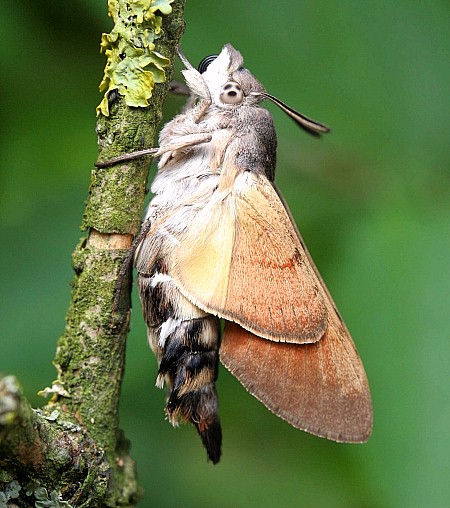
Macroglossum stellatarum
tpittaway.tripod.com

               At the port in Norfolk, Virginia CBP intercepted for the first time, Macroglossum stellatarum  Linnaeus (1758), the hummingbird hawk-moth. The moth is found though out most of Europe, Asia and Northern Africa. While the species is unable to survive cold winters, the adults are strong enough fliers that they seasonally migrate from the Mediterranean region North to Sweden & Iceland. The Encyclopedia of Life notes that
"The hummingbird hawk-moth is named for its long proboscis (straw like mouth) and its hovering behavior, which, accompanied by an audible humming noise, give it remarkable resemblance to a hummingbird as it visits flowers to feed on nectar."[2]
Humans see various shades of dull brown or grey in the forewings of the moth. On the other hand, they reveal characteristic fluorescent yellow, violet, purple and green patterns under ultraviolet light . Thus to birds and other insects the moth is most likely brightly patterned.[3]

Coreus marginatus
www.britishbugs.org.uk
               The Port of Norfolk also saw for the first time the arrival and discovery of Coreus marginatus Linnaeus (1758). The uninvited accidental visitor was found in a shipment of tile from Italy. This species if found throughout most of Europe where it feeds on plants in the genus Rumex. In addition inspectors also discovered at the Norfolk facility an adult moth hiding out amongst military cargo. The moth was identified as Autophila ligaminosa Eversmann (1851). This is the first time this species found in the sub-alpine region from the Balkans west to Afghanistan has been identified entering the US.  
Autophila ligaminosa 
www.ppis.moag.gov.il -


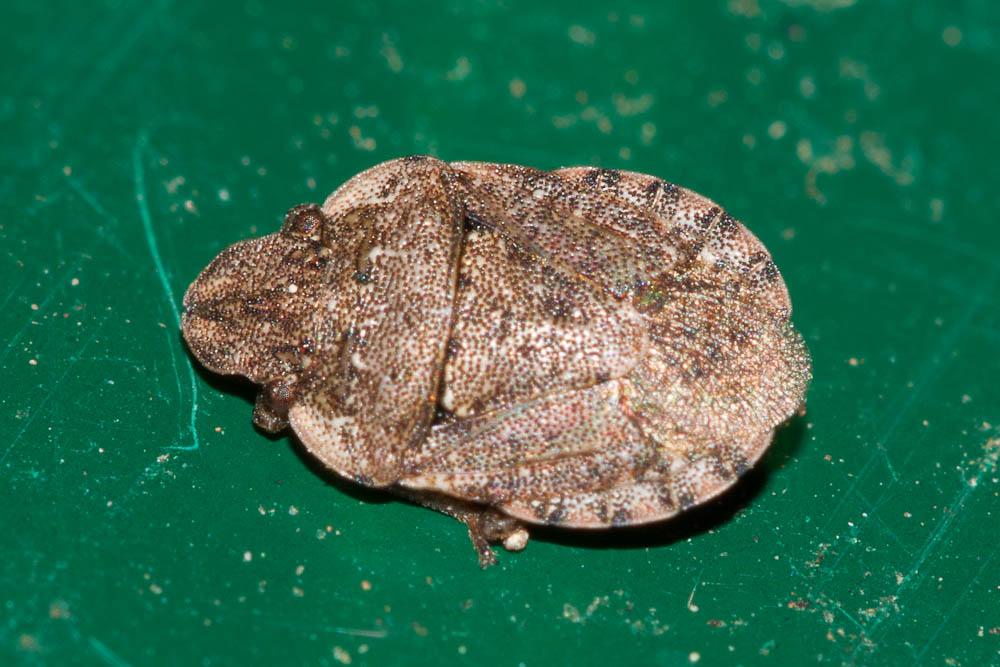
               In the historic rivalry between Virginia and Maryland, the Port of Baltimore was not without its own early detection of non native visitors taking advantage of the enormous flow of global trade. And to make matters even worse one of the interception was yet another stink bug. Baltimore CBP found a moderate sized stinkbug in a shipment of tile that was later identified to be Sciocoris sideritidis Wollaston (1858). This is the first time this species has been identified entering the US. Just wait until an undetected mating pair of this new species to the shores of the United States sets up shop and works with the two existing invasive stink bugs already sucking their way through vegetables, fruits, and soya beans. Reducing USDA funding through political mismanagement and grand standing in Congress is a sure way to encourage this opportunity. 

Sciocoris sideritidis
www.naturedugard.org 

             And last but not least, remembering that airports are ports too, a baggage interception in Baltimore was confirmed to be Tetraleurodes andropogoni Dozier (1934), a type of white fly. This is the first time this species have been intercepted entering the US.  According to CPB "the insects were discovered on fresh leaves being carried by a passenger originating from Nigeria and arriving from the United Kingdom."[4]  


[2] EOL. Macroglossum stellatarum. [accessed May 17, 2013] http://eol.org/pages/396579/overview
[3] Macroglossum Scopoli, 1777, Introd. Hist. nat.: 414. [accessed May 17, 2013] http://tpittaway.tripod.com/sphinx/m_ste.htm
[4] Baltimore CBP Intercepts First in Nation Whitefly. Thursday, April 11, 2013. [accessed May 17, 2013] http://www.cbp.gov/xp/cgov/newsroom/news_releases/local/04112013_7.xml

Monday, August 20, 2012

USDA-ARS NAL - National Agricultural Library

from: 

U.S. Department of Agriculture (USDA) Pomological Watercolor Collection


                                   The National Agricultural Library's Abraham Lincoln Building (USDA_ARS NAL) is located in Beltsville, Maryland, 15 miles northeast of Washington, DC, near the intersection of U.S. Route 1 and Interstates 95 and 495 (Beltway Exit 25-North). The Library occupies a 14-story building on the grounds of USDA's Beltsville Agricultural Research Center (BARC). On May 15, 1862, Abraham Lincoln signed into law the Agricultural Act that established the U.S. Department of Agriculture. The newly created Department the newly-created Department of Agriculture and the Secretary of Agriculture were and are charged with the duty "to acquire and preserve in his Department all information concerning agriculture which he can obtain by means of books and correspondence." In 1864, USDA received appropriations that included for $4,000 for the library and laboratory.

               Today, the National Agricultural Library is one of five national libraries of the United States. It houses one of the world's largest and most accessible agricultural information collections, if not indeed the largest and serves as the nexus for a national network of state land-grant and U.S. Department of Agriculture field libraries. In fiscal year 2011 (Oct 2010 through Sept 2011) NAL delivered more than 100 million direct customer service transactions.

               The Special Collections of USDA_ARS NAL houses rare books including Fuchs and Linnaeus originals, manuscript collections, nearly 300,000 nursery and seed trade catalogs, photographs, and posters including  original Smokey the Bear art work, and books, paitings and art from the 1500s to the present. Materials cover a variety of agricultural subjects including horticulture, entomology, poultry sciences, natural history, and are not limited to domestic publications. As part of the United States Department of Agriculture (USDA) and the Agricultural Research Service (ARS), Special Collections at the National Agricultural Library is charged with arranging, describing, preserving and making available rare materials significant to the history of agriculture and the USDA.

               "More than 100 white boxes fill shelf after shelf of the fifth floor at the National Agricultural Library (NAL), sheltering secrets of U.S. Department of Agriculture parasite investigations from 1886 to 1987. The boxes are filled with line drawings, photographs, lantern slides, research notes, documents, and correspondence that represent the early history of parasitology work, especially in taxonomy and systematics, conducted over the past 100 years and more by USDA scientists."  

Fast Facts:
·        Time period: 1886 to 1942, with the majority created between 1894 and 1916.
·        Content: 7,584 watercolor paintings, lithographs and line drawings, including 3,807 images of apples.
·        Fruit origins: The plant specimens illustrated originated in 29 countries and 51 states and territories in the U.S.
·        Artists: The paintings were created by approximately twenty-one artists commissioned by USDA for this purpose. Some works are not signed.
·        Reproductions: NAL can provide, for a fee, high quality prints and digital files of the images. Please refer to the "Buy Rare and Special Collections Products.".


Thursday, August 09, 2012

Help keep the National Invasive Species Information Center website program up, funded and operational (NISIC)


               I am asking you to help keep the National Invasive Species Information Center website program up, funded and operational. (NISIC) which is a program of USDA-ARS NAL, is under the financial knife and as part of the incessant focus on cutting the federal programs this vital infrastructure is now targeted to help off set deficit spending in other places in the government. The idea that information for the public good should be privatized is wrong on so many levels, but here with invasive species because of the global nature and local consequence, only a public site can provide equal access to all users.

               Please add a comment to this post, and write to the Secretary of Agriculture and the US Congress. If you have time, write to USDA ARS NAL directly. I have rarely asked for anything, but now we have little time. Please add your comments to this posting today. Just a few words...volume is what counts. KEEP NISIC FUNDED is all you have to say, but of course telling them why it is important helps too.


Tell them to find the money to keep information freely flowing.

               NISIC is the gateway to invasive species information; covering Federal, State, local, and international sources. Most of the work on invasive species has long since been defunded and is now handled by volunteers who valiantly war against novel non indigenous species that are wreaking havoc and altering our ecosystems and the services they provide. The volunteers will be in no position to spend money to access information on early detection, rapid response, control methods, taxonomic, regulatory, and legislative initiatives if we privatize this information, and, because the volunteers have no money, accordingly it will not be offered.

At the NISIC website, you can keep current on the following invasive species issues:
·        Join a Discussion List
·        Read About Emerging Issues
·        Find Press Releases
·        Read Newsletters
·        Read Success Stories
Also on the NISIC website you can:
·        Us the A-Z Index or other Helpful Resources
·        Find Databases
·        Find Species Profiles (AnimalsAquatic SpeciesMicrobes, and Plants)
·        Find USDA Publications
·        Locate Experts
·        Locate Images
·        Ask A Question
·        Find U.S. Information
·        Locate Experts
o   Read the Executive Order 13112 (established the National Invasive Species Council)
NISIC is a resource for Students and Teachers:
·        Learn About Plant Names and Taxonomy (USDA, NAL)
·        Find Species Profiles (AnimalsAquatic SpeciesMicrobes, and Plants)
·        Locate Graduate Programs
·        Ask A Question
And, NISIC is an information source for professionals:
·        Attend a Conference
·        Find Conference Proceedings
·        Locate Graduate Programs
·        Search for Journal Articles
·        Find Grant Information