Showing posts sorted by relevance for query basket grass. Sort by date Show all posts

Friday, August 24, 2012

Invasive Species - Example of the Cost of Disinterest - wavyleaf basket grass - Oplismenus hirtellus ssp. undulatifolius (Ard.) U. Scholz


               The best way to control or manage invasive species is to find them early and do something about them quickly before they can get established and spread. This strategy is known as IPM (Integrated Pest Management) in agriculture/horticulture and EDRR (Early Detection & Rapid Response) in ecology. Identification of a novel species is the first step because you cannot control what you do not know. Ignorance is not bliss when it comes to gardens, landscapes and natural areas.
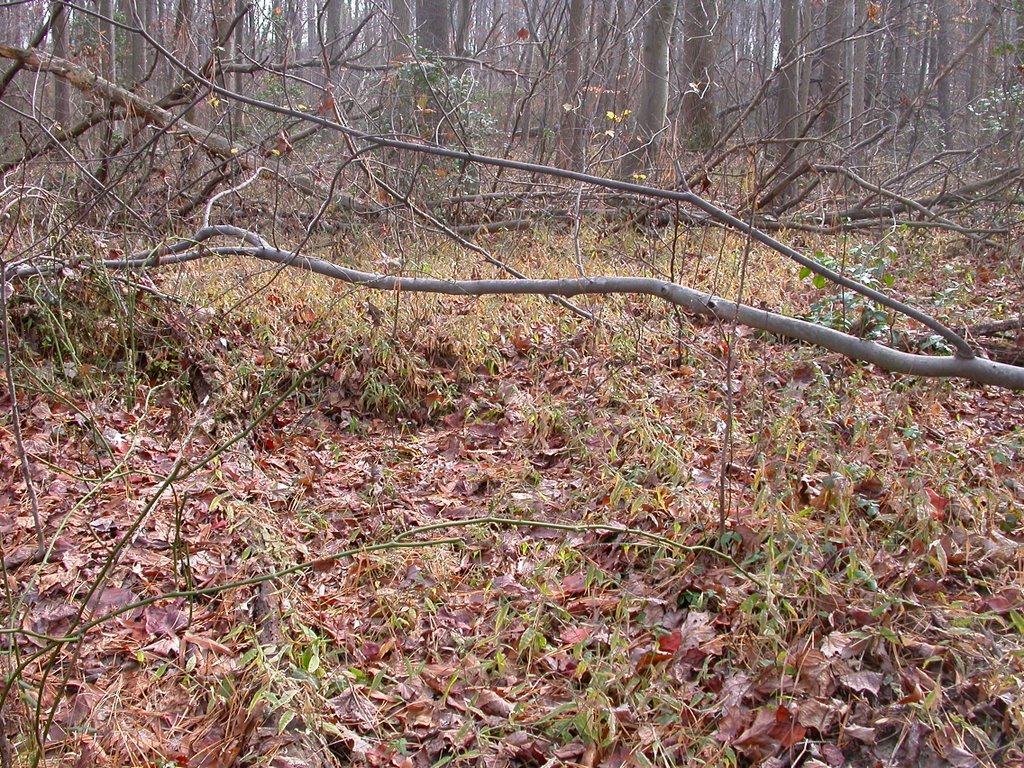
               In the Mid Atlantic region of the eastern United States there is a new invader that is spreading rapidly, wavyleaf basket grass. It is now six years since I first wrote about this species. With the exception of the valiant work of a few people such as Imlay, Kyde, Bergmann, Swearingen, Marose, and a small group of concerned, volunteer weed warriors, we have done nothing, and the plant is spreading perhaps soon to a point of no control because the cost will become too great even as the ecosystem damage sky-rockets to a point of no return. We could have controlled this plant and even eradicated 16 years ago when it was first 'discovered' outside of Baltimore, and we could have done it for a few dollars and some hours if we had practiced the principles of EDRR. We did nothing and it is now in the mountains of western Virginia.                
               A review of the uncertainty surrounding accurate identification of Oplismenus hirtellus ssp. undulatifolius (Ard.) U. Scholz is in order. The genus Oplismenus is not economically important but has been known to western science since the early 19th century. As with many grasses, classification and categorization of the many species in the genus Oplismenus is difficult and confused. Oplismenus hirtellus ssp. undulatifolius was first described as Panicum undulatifolium by the Italian botanist, Pietro Arduino, in 1764. The great naturalist Palisot de Beauvois assigned P. undulatifolius to the genus Oplismenus (Palisot de Beauvois, 1812).

               The most complete descriptions of the various members or taxa of the genus Oplismenus was written by Ursula Scholz in 1981 - in German - so bone up on your foreign language skills (Scholz, 1981). Because o the description difficulties inherent in Oplismenus hirtellus ssp. undulatifolius (Ard.) U. Scholz as a host of synonyms or "other names" which add to the confusion when attempting to research this species on the internet.  

The Maryland and Virginia populations have been positively identified as Oplismenus hirtellus ssp. undulatifolius (Ard.) U. Scholz . An ornamental variegated pink, green and white form is sold under numerous, varied names such as O. hirtellus “Variegatus”, O. africanus 'Variegatus', O. variegatus, O. burmanii 'Variegatus', Panicum variegatum, “Ribbon grass,” or “basket grass". This ornamental variegated Oplismenus used in gardens and sold at nurseries is not Oplismenus hirtellus ssp. undulatifolius. It is a sterile variegated garden species has been propagated and distributed under numerous names since its introduction to the florist, garden and nursery trade in the mid 19th century (Long, 1874).

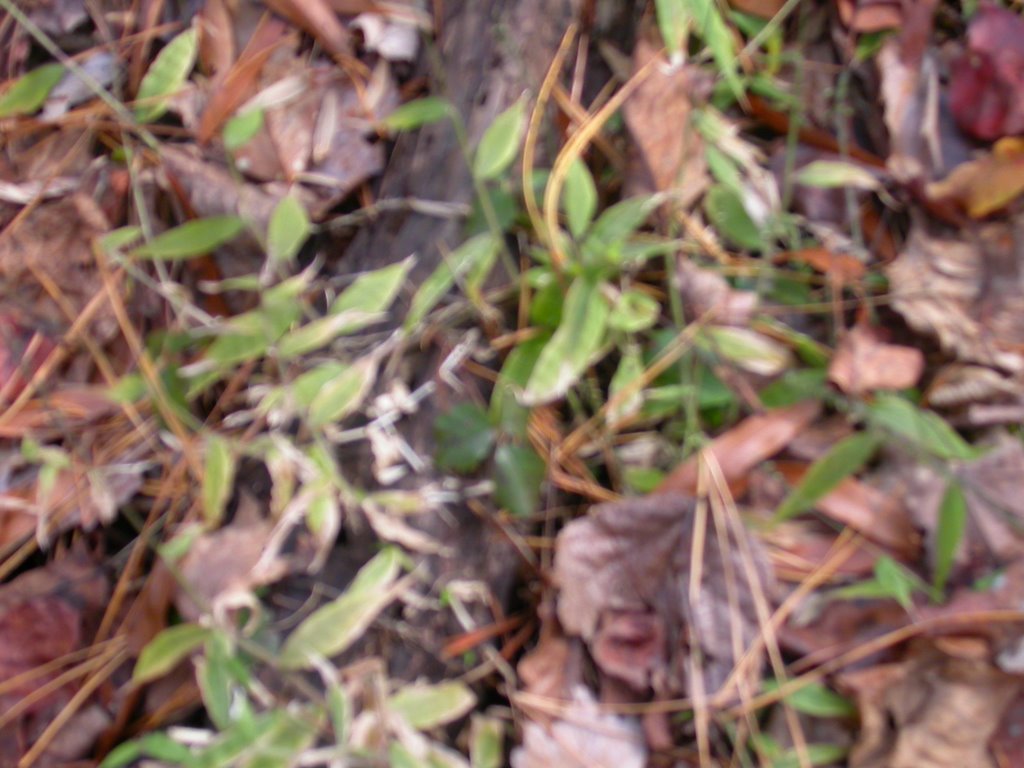
               Oplismenus hirtellus ssp. undulatifolius (Ard.) U. Scholz  is native to Europe and Asia. It is a shade tolerant, low-growing, perennial grass, with leaf blades that are flat, dark green, about 0.5” wide and 1.5-4” long, with rippling waves across the grass blades.  The leaf sheaths and stems are noticeably hairy.  O.  hirtellus ssp. undulatifolius has spikelet's that form long sticky awns (Scholz, 1981; Peterson et al., 1999; Kyde & Marose, 2008; Westbrooks & Imlay, 2009).

               Be very careful when planning a control effort because there are two native species:   Oplismenus hirtellus ssp. setarius (Lam.) Mez ex Ekman and O. hirtellus subsp. fasciculatus U. Scholz. Also beware that wavyleaf  basketgrass looks like Arthraxon hispidus (Thunb.) Makino and Microstegium vimineum (Trin.) A. Camus. Microstegium vimineum is the ever present rampant invasive also known as Japanese stilt grass.

      I have just finished a datasheet on wavyleaf basket grass, Oplismenus hirtellus ssp. undulatifolius (Ard.) U. Scholz, for CABI's Invasive Species Compendium   

References

1         Atlas of Living Australia 2012 Oplismenus undulatifolius (Ard.) Roem. & Schult. Australian node of the Global Biodiversity Information Facility (GBIF).
2         Beauchamp, V. B. 2012 Niche requirements and competitive effects of a new forest invader, Oplismenus hirtellus spp. undulatifolius (wavyleaf basket grass). 997th ESA Annual Meeting (August 5 -- 10, 2012) program annoucement and abstracts.
3         Chen, S. & Hillips, S. M. 2012 Flora of China. Harvard University Herbaria 22, 593–598.
4         Dakskobler, I. & Vreš, B. 2009 Novosti v flori severnega dela submediteranskega območja Slovenije (Novelities in the flora of) the northern part of the Submediterranean region of Slovenija. Hladnikia 24, 13–34.
5         Dalziel, J. M. & Hutchinson, J. 1948 The useful plants of west tropical Africa: being an appendix to the Flora of west tropical Africa. Published under the authority of the Secretary of State for the Colonies by the Crown Agents for the Colonies.
6         Davey, J. C. & Clayton, W. D. 1978 Some multiple discriminant function studies on Oplismenus (Gramineae). Kew Bull. 33, 147 – 157.
7         eFloras.org 2012 Flora of Pakistan. eFloras.org.
8         Global Biodiversity Information Facility (GBIF) 2012 GBIF Data Portal. GBIF Secretariat.
9         Hitchcock, A. S. 1920 Revisions of North American grasses: Isachne, Oplismenus, Echinochloa, and Chaetochloa. Govt. Print. Off.
10       Hitchcock, A. S. 1935 Manual of Grasses of the United States. Miscellane. Washington, D.C., USA: United States Government Printing Office.
11       ISSG 2012 Global Invasive Species Database (GISD). Invasive Species Specialist Group of the IUCN Species.
12       Kyde, K. L. & Marose, B. H. 2008 Wavyleaf basketgrass in Maryland: an early detection rapid response program in progress. Invasive Resources,.
13       Long, E. A. 1874 The home florist: a treatise on the cultivation, management and adaptability of flowering and ornamental plants, designed for the use of amateur florists. Buffalo, NY USA: Long Brothers.
14       Palisot de Beauvois, A. M. F. J. 1812 Essai d’une Nouvelle Agrostographie. Paris, FR:
15       PCA-APWG 2010 Wavyleaf Basketgrass Oplismenus hirtellus ssp. undulatifolius (Ard.) U. Scholz. PCA-APWG.
16       Peterson, P. M., Terrell, E. E., Uebel, E. C., Davis, C. A., Scholz, H. & Soreng, R. J. 1999 Oplismenus hirtellus subspecies undulatifolius, a new record for North America. Castanea 64, 201–202.
17       Plants for Use 2008 Oplismenus hirtellus (L.) Palib. POACEAE Common names: Basket Grass (Hortus).
18       Scholz, H. & Byfeld, A. J. 2000 Three Grasses New to Turkey. Turk J Bot 24, 263–267.
19       Scholz, U. 1981 Monographie der Gattung Oplismenus Gramineae. Phanerogamarum monographiae 13, 213.
20       Snow, N. & Lau, A. 2008 Notes on grasses (Poaceae) in Hawai‘i: 2. Records of the Hawaii Biological Survey, Bishop Museum Occasional Papers 107, 46–60.
21       The Plant List 2010 Version 1.
22       Thompson, J. P. 2009 Invasive species: wavyleaf basketgrass - Oplismenus hirtellus subsp. undulatifolius. Invasive Notes Weblog.
23       USDA ARS 2012 Germplasm Resources Information Network - (GRIN). National Genetic Resources Program.
24       USDA-APHIS PPQ CPHST. 2009 Differences of Oplismenus hirtellus ssp. undulatifolius to native and horticultural taxa. , 33–35.
25       USDA-APHIS PPQ PERAL 2012 Weed Risk Assessment for Oplismenus hirtellus (L.) P. Beauv. subsp. undulatifolius (Ard.) U. Scholz (Poaceae) – Wavyleaf basketgrass - ver 2, June 14, 2012.
26       USDA-ARS 2012 Germplasm Resources Information Network (GRIN).
27       Valdés, B., Scholz, H., Raab-Straube, E. von & Parolly, G. 2009 Poaceae (pro parte majore). Euro+Med Plantbase - the information resource for Euro-Mediterranean plant diversity.
28       Wavyleaf Basketgrass Task Force - 2009 Wavyleaf Basketgrass Task Force Meeting Minutes. , 9.
29       Weakley, A. S. 2011 Flora of the Southern and Mid-Atlantic States. North Carolina Botanical Garden & University of North Carolina at Chapel Hill.
30       Westbrooks, R. & Imlay, M. 2009 Wavyleaf Basketgrass – A New Invader of Deciduous Forests in Maryland and Virginia.
31        Wipff, J. K. 2009 Flora of North America - Oplismenus P. Beauv.- 25.06.  

Monday, November 27, 2006

New Invasive; Early Detection; Rapid Response

Wavy-leaf basket grass, a great marketing name, is the common name for Oplismenus hirtellus subsp undulatifolius. Dr. Marc Imlay and his team of volunteers working to remove invasive species from a park in Maryland near Washington, DC., think they have an excellent case for early detection and rapid response. Today, I walked into the park with Dr. Imlay and say for my self the almost three acres of infested area.
Of course I should have walked over the hill to the USDA National Library through the Beltsville Agricultural Research Center, but instead I turned to easy to use if not always trusty web search engines to learn more about this grass. I can see the demons of conflicting schools of thought before I even read through the pages of information on line, including the basic claim of native to where, along with the infamous Hedera-helix- spp-are-not-invasive discussion.

Dr. Imlay has well planted sources which reported to him that: “Paul Peterson at the Natural History museum identified the grass as Oplismenus hirtellus subsp undulatifolius. He published a note on this grass in 1999 along with Charlie Davis, Ed Uebel and Rob Soreng, when it was found to be a new record for North America. Ed Uebel discovered it in Patapsco Valley State Park, (MD) and another site several miles north of the park, occurring in small to medium sized patches. It is native to southern Europe and southeastern Asia. It certainly sounds like it has the potential to be another invasive since it is stoloniferous, has seeds that stick to clothing, and appeared to be spreading according to Ed Uebel.”

The first site that I found was courtesy of Isabel Johnson, KwaZulu-Natal National Botanical Garden:
“Description This is a creeping or rambling perennial grass, which roots and branches freely from the nodes. The broad, deep green, lancet-shaped leaves are held horizontally and create a woven effect when viewed from above. The flowers, which appear from December to June, are borne on longitudinal racemes branching out from the culm or flowering stalk, which extends about 200 mm above the leaves. The purple awns are sticky, especially when fresh.
Distribution A typical constituent of the forest undergrowth, tolerating dense shade, basket grass is widespread in the eastern regions of southern Africa . It occurs in the summer rainfall areas and is not usually exposed to frost as it grows underneath trees.
Derivation of name and historical aspects This is a small genus of three or four species widespread in the subtropical regions of the world, and related to Panicum grass). O. hirtellus is similar in appearance to O. undulatifolius , which occurs in the same habitat, but the latter has clumped, not longitudinal, spikelets.
Ecology The sticky seeds attach to visiting animals and birds, which carry them to new areas. Most grasses are wind- or self-pollinated, but little is known of the pollination of shade grass.
Uses and cultural aspects This grass is used horticulturally, especially in the USA , where a variegated pink, white and green form is popular in hanging baskets.
Growing Oplismenus hirtellus A good groundcover for difficult shady areas, this grass deserves to be used much more extensively. Basket grass is ideal to plant between stepping-stones along shady paths. It can be lightly mowed, but this is best done infrequently and with the lawnmower at the highest setting. As with all shade grasses, a large leaf area is essential to receive enough light for photosynthesis, so it will not survive if kept short. It will also tolerate some sun, and can be planted in less shady areas. This grass is easy to grow in a mixture of loam, leaf mould, and sand. It may be propagated by runners, or from seed, which is freely produced and germinates readily.”

Astute readers will note the reference to horticultural use above. As a plantsman, I am immediately intrigued. The WeedUS Database lists the species as an invader in Hawaii. Wilcox Nursery in Florida lists the species as native – to Florida – I assume. I must note hear that a check with the staff at my own place of business, Behnke Nurseries, reveals that we did indeed try to sell this plant a few years ago. And this from the park’s neighbors, United States Department of Agriculture, Agricultural Research Service, Beltsville Area, Germplasm Resources Information Network :
Distributional range
AFRICA
Northeast Tropical Africa: Eritrea; Ethiopia, East Tropical Africa: Kenya; Tanzania; Uganda, West-Central Tropical Africa: Cameroon; Equatorial Guinea – Bioko, West Tropical Africa: Cote D'Ivoire; Ghana; Liberia; Mali; Nigeria; Senegal; Sierra Leone; Togo, South Tropical Africa: Malawi; Zambia; Zimbabwe, Southern Africa: Botswana; South Africa - Cape Province [e.], Natal, Transvaal; Swaziland
ASIA-TEMPERATE Arabian Peninsula: Yemen
NORTHERN AMERICA
Southeastern U.S.A.: United States - Alabama, Arkansas, Florida, Georgia, Louisiana, Maryland [n.-c.], Mississippi, North Carolina, South Carolina, South-Central U.S.A.: United States - Texas
PACIFIC
South-Central Pacific: French Polynesia, Southwestern Pacific: Fiji ,
SOUTHERN AMERICA
Mesoamerica: Belize; Costa Rica; El Salvador; Guatemala; Honduras; Nicaragua; Panama, Caribbean: Antigua and Barbuda - Antigua; Bahamas; Cuba; Dominica; Grenada; Guadeloupe; Hispaniola; Jamaica; Martinique; Netherlands Antilles; Puerto Rico; St. Kitts and Nevis - St. Kitts; St. Lucia; St. Vincent and Grenadines, Northern South America: French Guiana; Guyana; Suriname; Venezuela, Brazil: Brazil, Western South America: Bolivia; Colombia; Ecuador; Peru, Southern South America: Argentina; Paraguay; Uruguay

The crux of the matter is that we are at a decision point. We could do nothing and see what happens; or we could eliminate this plant from natural areas and reconsider its propagation and distribution before it becomes a commodity both for homeowners and for land managers. Early detection and rapid response is an attempt to prevent the spread of pests such as the emerald ash borer, also here in my home county of Prince George’s, and northern snakeheads; yes, also in my county. Waiting to see what happens can lead to kudzu and fire ants, too little too late and now, we collectively pay the price for inaction.

New invader; early detection, rapid response

Wavy-leaf basket grass, a great marketing name, is the common name for Oplismenus hirtellus subsp undulatifolius. Dr. Marc Imlay and his team of volunteers working to remove invasive species from a park in Maryland near Washington, DC., think they have an excellent case for early detection and rapid response. Today, I walked into the park with Dr. Imlay and say for my self the almost three acres of infested area.

Of course I should have walked over the hill to the USDA National Library through the Beltsville Agricultural Research Center, but instead I turned to easy to use if not always trusty web search engines to learn more about this grass. I can see the demons of conflicting schools of thought before I even read through the pages of information on line, including the basic claim of native to where, along with the infamous Hedera-helix- spp-are-not-invasive discussion.

Dr. Imlay has well planted sources which reported to him that: “Paul Peterson at the Natural History museum identified the grass as Oplismenus hirtellus subsp undulatifolius. He published a note on this grass in 1999 along with Charlie Davis, Ed Uebel and Rob Soreng, when it was found to be a new record for North America. Ed Uebel discovered it in Patapsco Valley State Park, (MD) and another site several miles north of the park, occurring in small to medium sized patches. It is native to southern Europe and southeastern Asia. It certainly sounds like it has the potential to be another invasive since it is stoloniferous, has seeds that stick to clothing, and appeared to be spreading according to Ed Uebel.”

The first site that I found was courtesy of Isabel Johnson, KwaZulu-Natal National Botanical Garden:
“Description This is a creeping or rambling perennial grass, which roots and branches freely from the nodes. The broad, deep green, lancet-shaped leaves are held horizontally and create a woven effect when viewed from above. The flowers, which appear from December to June, are borne on longitudinal racemes branching out from the culm or flowering stalk, which extends about 200 mm above the leaves. The purple awns are sticky, especially when fresh.
Distribution A typical constituent of the forest undergrowth, tolerating dense shade, basket grass is widespread in the eastern regions of southern Africa . It occurs in the summer rainfall areas and is not usually exposed to frost as it grows underneath trees.
Derivation of name and historical aspects This is a small genus of three or four species widespread in the subtropical regions of the world, and related to Panicum grass). O. hirtellus is similar in appearance to O. undulatifolius , which occurs in the same habitat, but the latter has clumped, not longitudinal, spikelets.
Ecology The sticky seeds attach to visiting animals and birds, which carry them to new areas. Most grasses are wind- or self-pollinated, but little is known of the pollination of shade grass.
Uses and cultural aspects This grass is used horticulturally, especially in the USA , where a variegated pink, white and green form is popular in hanging baskets.
Growing Oplismenus hirtellus A good groundcover for difficult shady areas, this grass deserves to be used much more extensively. Basket grass is ideal to plant between stepping-stones along shady paths. It can be lightly mowed, but this is best done infrequently and with the lawnmower at the highest setting. As with all shade grasses, a large leaf area is essential to receive enough light for photosynthesis, so it will not survive if kept short. It will also tolerate some sun, and can be planted in less shady areas. This grass is easy to grow in a mixture of loam, leaf mould, and sand. It may be propagated by runners, or from seed, which is freely produced and germinates readily.”

Astute readers will note the reference to horticultural use above. As a plantsman, I am immediately intrigued. The WeedUS Database lists the species as an invader in Hawaii. Wilcox Nursery in Florida lists the species as native – to Florida – I assume. I must note hear that a check with the staff at my own place of business, Behnke Nurseries, reveals that we did indeed try to sell this plant a few years ago. And this from the park’s neighbors, United States Department of Agriculture, Agricultural Research Service, Beltsville Area, Germplasm Resources Information Network :
Distributional range
AFRICA
Northeast Tropical Africa: Eritrea; Ethiopia, East Tropical Africa: Kenya; Tanzania; Uganda, West-Central Tropical Africa: Cameroon; Equatorial Guinea – Bioko, West Tropical Africa: Cote D'Ivoire; Ghana; Liberia; Mali; Nigeria; Senegal; Sierra Leone; Togo, South Tropical Africa: Malawi; Zambia; Zimbabwe, Southern Africa: Botswana; South Africa - Cape Province [e.], Natal, Transvaal; Swaziland
ASIA-TEMPERATE Arabian Peninsula: Yemen
NORTHERN AMERICA
Southeastern U.S.A.: United States - Alabama, Arkansas, Florida, Georgia, Louisiana, Maryland [n.-c.], Mississippi, North Carolina, South Carolina, South-Central U.S.A.: United States - Texas
PACIFIC
South-Central Pacific: French Polynesia, Southwestern Pacific: Fiji ,
SOUTHERN AMERICA
Mesoamerica: Belize; Costa Rica; El Salvador; Guatemala; Honduras; Nicaragua; Panama, Caribbean: Antigua and Barbuda - Antigua; Bahamas; Cuba; Dominica; Grenada; Guadeloupe; Hispaniola; Jamaica; Martinique; Netherlands Antilles; Puerto Rico; St. Kitts and Nevis - St. Kitts; St. Lucia; St. Vincent and Grenadines, Northern South America: French Guiana; Guyana; Suriname; Venezuela, Brazil: Brazil, Western South America: Bolivia; Colombia; Ecuador; Peru, Southern South America: Argentina; Paraguay; Uruguay

The crux of the matter is that we are at a decision point. We could do nothing and see what happens; or we could eliminate this plant from natural areas and reconsider its propagation and distribution before it becomes a commodity both for homeowners and for land managers. Early detection and rapid response is an attempt to prevent the spread of pests such as the emerald ash borer, also here in my home county of Prince George’s, and northern snakeheads; yes, also in my county. Waiting to see what happens can lead to kudzu and fire ants, too little too late and now, we collectively pay the price for inaction.

Friday, September 28, 2012

Invasive Wavyleaf Basketgrass Oplismenus hirtellus ssp. undulatifolius (Ard.) U. Scholz - Bibliography

Image from: Sierra Club, Maryland Chapter: Wavy Leaf Basket Grass: An In-Depth Look

  
Atlas of Living Australia. (2012). Oplismenus undulatifolius (Ard.) Roem. & Schult. [WWW Document]. Australian node of the Global Biodiversity Information Facility (GBIF). URL http://bie.ala.org.au/species/Oplismenus+undulatifolius

Beauchamp, V.B. (2012). Niche requirements and competitive effects of a new forest invader, Oplismenus hirtellus spp. undulatifolius (wavyleaf basket grass). In: 997th ESA Annual Meeting (August 5 -- 10, 2012) program annoucement and abstracts. Towson, Maryland, USA.

Chen, S. & Hillips, S.M. (2012). Flora of China. Harvard University Herbaria, 22, 593–598.

Dakskobler, I. & Vreš, B. (2009). Novosti v flori severnega dela submediteranskega območja Slovenije (Novelities in the flora of) the northern part of the Submediterranean region of Slovenija. Hladnikia, 24, 13–34.

Dalziel, J.M. & Hutchinson, J. (1948). The useful plants of west tropical Africa: being an appendix to the Flora of west tropical Africa. Published under the authority of the Secretary of State for the Colonies by the Crown Agents for the Colonies.

Davey, J.C. & Clayton, W.D. (1978). Some multiple discriminant function studies on Oplismenus (Gramineae). Kew Bull., 33, 147 – 157.

Global Biodiversity Information Facility (GBIF). (2012). GBIF Data Portal [WWW Document]. GBIF Secretariat. URL http://data.gbif.org/species/4033648/

Hitchcock, A.S. (1920). Revisions of North American grasses: Isachne, Oplismenus, Echinochloa, and Chaetochloa. Govt. Print. Off.

Hitchcock, A.S. (1935). Manual of Grasses of the United States. Miscellane. United States Government Printing Office, Washington, D.C., USA.

ISSG. (2012). Global Invasive Species Database (GISD) [WWW Document]. Invasive Species Specialist Group of the IUCN Species. URL http://www.issg.org/database

Kyde, K.L. & Marose, B.H. (2008). Wavyleaf basketgrass in Maryland: an early detection rapid response program in progress [WWW Document]. Invasive Resources,. URL http://www.dnr.state.md.us/wildlife/Plants_Wildlife/WLBG/pdfs/wlbg_poster011108.pdf

Long, E.A. (1874). The home florist: a treatise on the cultivation, management and adaptability of flowering and ornamental plants, designed for the use of amateur florists. Long Brothers, Buffalo, NY USA.

PCA-APWG. (2010). Wavyleaf Basketgrass Oplismenus hirtellus ssp. undulatifolius (Ard.) U. Scholz [WWW Document]. PCA-APWG. URL http://www.nps.gov/plants/alien/pubs/midatlantic/ophiu.htm

Palisot de Beauvois, A.M.F.J. (1812). Essai d’une Nouvelle Agrostographie. Paris, FR.

Peterson, P.M., Terrell, E.E., Uebel, E.C., Davis, C.A., Scholz, H. & Soreng, R.J. (1999). Oplismenus hirtellus subspecies undulatifolius, a new record for North America. Castanea, 64, 201–202.

Plants for Use. (2008). Oplismenus hirtellus (L.) Palib. POACEAE Common names: Basket Grass (Hortus) [WWW Document]. URL http://plantsforuse.com/index.php?page=1&id=2604

Scholz, H. & Byfeld, A.J. (2000). Three Grasses New to Turkey. Turk J Bot, 24, 263–267.

Scholz, U. (1981). Monographie der Gattung Oplismenus Gramineae. Phanerogamarum monographiae, 13, 213.

Snow, N. & Lau, A. (2008). Notes on grasses (Poaceae) in Hawai‘i: 2. Records of the Hawaii Biological Survey, Bishop Museum Occasional Papers, 107, 46–60.

The Plant List. (2010). Version 1 [WWW Document]. URL http://www.theplantlist.org/

Thompson, J.P. (2009). Invasive species: wavyleaf basketgrass - Oplismenus hirtellus subsp. undulatifolius [WWW Document]. Invasive Notes Weblog. URL http://ipetrus.blogspot.com/2009/04/invasive-species-wavyleaf-basketgrass.html

USDA ARS. (2012). Germplasm Resources Information Network - (GRIN) [WWW Document]. National Genetic Resources Program. URL http://www.ars-grin.gov/cgi-bin/npgs/html/taxon.pl?27364

USDA-APHIS PPQ CPHST. (2009). Differences of Oplismenus hirtellus ssp. undulatifolius to native and horticultural taxa. Fort Collins, Colorado USA.

USDA-APHIS PPQ PERAL. (2012). Weed Risk Assessment for Oplismenus hirtellus (L.) P. Beauv. subsp. undulatifolius (Ard.) U. Scholz (Poaceae) – Wavyleaf basketgrass - ver 2, June 14, 2012. Raleigh, NC 27606 USA.

USDA-ARS. (2012). Germplasm Resources Information Network (GRIN). [WWW Document]. URL http://www.ars-grin.gov/cgi-bin/npgs/html/taxon.pl?316751

Valdés, B., Scholz, H., Raab-Straube, E. von & Parolly, G. (2009). Poaceae (pro parte majore) [WWW Document]. Euro+Med Plantbase - the information resource for Euro-Mediterranean plant diversity. URL http://ww2.bgbm.org/EuroPlusMed/PTaxonDetailOccurrence.asp?NameId=140116&PTRefFk=7100000

Wavyleaf Basketgrass Task Force -. (2009). Wavyleaf Basketgrass Task Force Meeting Minutes.

Weakley, A.S. (2011). Flora of the Southern and Mid-Atlantic States. Flora of the Southern and Mid-Atlantic States. North Carolina Botanical Garden & University of North Carolina at Chapel Hill.

Westbrooks, R. & Imlay, M. (2009). Wavyleaf Basketgrass – A New Invader of Deciduous Forests in Maryland and Virginia.

Wipff, J.K. (2009). Flora of North America - Oplismenus P. Beauv.- 25.06. Flora of North America.

eFloras.org. (2012). Flora of Pakistan [WWW Document]. eFloras.org. URL http://www.efloras.org/object_page.aspx?object_id=60963&flora_id=5
  

Saturday, January 01, 2011

Invasive Species are eating your lunch; and changing your world


    Invasive species are changing your world. They are changing the landscapes right in front of your eyes, and they are literally eating your lunch. They are replacing species that you once took for granted like chestnut and elm and now ash trees, as well as changing the very texture of plants that support your world perhaps even your quality of life. And though they are doing this rather quickly, you are mostly oblivious because you can no longer read the landscape. If the grass is green and there are trees then all is well as you rush from crisis to crisis. You have become landscape illiterate because your immediate needs do not seem to correlate with the complex interactions and relationships among microbes, plants, insets, reptiles and animals and you.

    Some invasive species are so personal you do, however, take notice and great amounts of time and energy, using early detection and rapid response strategies (EDRR) to keep pathogens, diseases and parasites out of that complex biological system known to you as your body. In this you are clear: that the ideal is to prevent the disease in the first place. And to this end you create quarantines, inspections and protocols that can stop commerce in its tracks. You are very careful not to let other people's uncontrolled adventures to exotic lands and places potentially impact your biological system. You are very willing to make a second party who provides a pathway for a disease pay the cost of prevention if possible. You hold the government accountable to the personal common good and expect it to inspect and detain travelers and merchandize that risk analysis have identified as probable vectors of human illness. Yellow fever, cholera, malaria, typhoid and influenza are in an analogous sense invasive species that once introduced into your biological system are able to wreak havoc.

    We are more focused when business interests might be impacted by alien exotic agents of lower profits. Agriculture is very concerned about invasive disease, plants and animals that reduce harvests and yields, and therefore, make production costs higher than sales potential. In other words, pests like Russian wheat aphids or the European corn borer reduce the amount of grain produced per field acre, and drive up the costs of doing business and eventually the cost of food. Agriculture has recognized in the United States the idea of preemption as an effective approach to reducing invasive species impacts on production and therefore costs and profits since at least 1726 and the banning of barberry in Connecticut. There are even laws and regulation in place to protect ornamental landscapes and its nursery industry promulgated by USDA APHIS in partnership with the individual states (National Plant Board).

    When it comes to your natural areas that preserve complex and diverse systems of life with as little human impact as possible, the rules change dramatically and the problems multiply as you externalize your life on to the dumping grounds of nature. A small group of advocates struggles to create a national policy with little to success. There is a national executive council (NISC) with an advisory committee (ISAC) but there is no funding; it can meet, network and advise, but it cannot make anything actually happen. Members and staff mostly talk to each other and to those very few who see the loss in the changes brought by invasive species. The landscape illiteracy translates in to an ignorance of the dynamics of ecological systems; systems to which you are an integral part. That green expanse in the parks of the mid-Atlantic is not a harmless flow of native grasses inviting to interacting with the ebb and flow of natural processes, but rather a non indigenous species which in my unsubstantiated lay opinion may have been introduced in utility rights-of-way seed mitigation mixes, is wavyleaf basket grass, Oplismenus hirtellus ssp. undulatifolius. This grass is spreading, as shown on EDDMapS, like a wild fire changing the fundamental make-up and processes of the last historic native species aggregations of the mid-Atlantic. As it crowds out native plants and the glorious wild flowers that provide sustenance to native insects, it is reducing the complexity of the food web and reducing the resiliency of these last great places of natural beauty and doing so without you seeing anything amiss. Desperate pleas from experts seeking funding in these economic times go unheeded; even in the heyday of uncontrolled spending bothering to spend money on the early eradication of a non native invader was never fully supported by you. You preferred to wait until the invader clearly and irrevocably damaged your personal space before you were willing to push your government to action.

    A dead ash tree falling onto your house (Emerald ash borer epidemic threatens Ohio trees) because of a borer from Asia which you chose to ignore has caught your attention even as the lack of funding went mostly unnoticed, until millions of acres of ash trees began to die. Now it is a rear guard action trying to hold the line. Historically the gypsy moth showed us this scenario over 100 years ago (The Great Gypsy Moth War: The History of the First Campaign in Massachusetts to Eradicate the Gypsy Moth, 1890–1901), when you decided to un-fund early attempts at control only to watch your woodlands become defoliated by the introduced exotic pest. You have clearly said through your silence that you prefer to throw your unwanted pets out onto the street creating a feral cat assault on song birds and you waited until the 15 foot snakes from Burma entered your bedrooms before you said there might be something wrong.

    You should have a national policy discussion; you need a plan and a fund much like the one you already have for wildfires that can be applied to early detection of invasive species and most importantly money for their rapid eradication at the time of detection when the costs are very small. You need to say that your natural areas are worth saving per se; that your management of these native enclaves will include the removal of certain species, and the preemption of their introduction into these United States.

    I continue to propose the creation of an all taxa grassroots funded effort to advocate and educate members of Congress as to the impacts of invasive species.


Picture of dead trees from Natural Resources Canada

Picture of wavyleaf basket grass from forestry images.org

Wednesday, April 01, 2009

Invasive species: wavyleaf basketgrass - Oplismenus hirtellus subsp. undulatifolius


An invasive species is spreading from the Baltimore area of Maryland south to Washington and west to the Blue Ridge of Virginia. Like a fire in the forest, wavyleaf basketgrass (Oplismenus hirtellus subsp. undulatifolius (Ard.) U. Scholz, Phanerog. Monogr.) [1] is spreading rapidly and replacing the natural diversity with its mono-culture habit of eco-system and eco-service destruction. This grass, which remains taxonomically confused and, therefore, not precisely identified or categorized, is spreading in public parks and on private lands in the Baltimore Washington Metropolitan area. picture from www.forestryimages.org/images/768x512/5390042.jpg
Image may be subject to copyright

Some species within the genus are sold in a highly unstable variegated form in the nursery, reportedly under a number of names, including Pancum spp. This species is not yet identified as the species loose in the public lands. Maryland Department of Natural resources reports that ”The native grasses are basketgrass (Oplismenus hirtellus) and its related native subspecies bristle basketgrass (Oplismenus hirtellus ssp. setarius). The exotic subspecies is wavyleaf basketgrass (Oplismenus hirtellus ssp. undulatifolius), and up to the summer of 2008, Maryland was the only place on the North American continent that this grass had been reported.”
There is an ongoing effort of some stakeholders to eradicate this species while before it becomes another overwhelming challenge to our natural systems and gardens Japanese stiltgrass (Microstegium vimineum (Trin.) Camus). In November, 2006, I posted an essay about Oplismenus hirtellus subsp undulatifolius, and have been following its progress ever since: v. Sunday, 2007: Invasive Species follow up: Basket Grass Removal in Beltsville


At a high philosophical level, the stakeholders interested in this newly detected invasive species are divided by the precautionary principle on the one hand and the proactionary principle on the other. The precautionary stakeholders want action now because they believe that there “… is a moral and political principle which states that if an action or policy might cause severe or irreversible harm to the public or to the environment, in the absence of a scientific consensus that harm would not ensue, the burden of proof falls on those who would advocate taking the action.” The proactionary parties are guided by their belief system are opposed to early action “… when restrictive measures are proposed: Assess risks and opportunities according to available science, not popular perception.”

Effectively what this means is that one side wants to go “public” and ask gardeners and horticulture in general to voluntarily stop selling and planting whatever species they are selling until the correct taxonomy is established the confusion: The other side is unwilling to shout fire in a crowded theater, and wants to wait because the prima facie evidence is that the plant species in the trade - no matter how aggressive - is different from the one running loose in the mid Atlantic woodlands. And effectively, a chance for early detection and rapid response is fading. Sic transit mundi


[1] Peterson, Paul M.. Department of Botany, MRC-166, United States National Herbarium
National Museum of Natural History, Smithsonian Institution Washington, DC 20013-7012, 202-633-0975, Fax 202-786-2563; peterson@si.edu :

The taxon [Oplismenus hirtellus subsp. undulatifolius (Ard.) U. Scholz, Phanerog. Monogr. 13:147. 1981. Panicum undulatifolium Ard., Animad. Spec. Alt. 14, pl. 4. 1764. Oplismenus undulatifolius (Ard.) P. Beauv., Ess. Agrostogr. 54, 168, 171. 1812, nom. nud. Oplismenus undulatifolius (Ard.) Roem. & Schult., Syst. Veg. (ed. 15) 2: 482. 1817. Orthopogon undulatifolius (Ard.) Spreng., Syst. Veg. 1: 306. 1824 (1825). Type: ITALY. cultivated, Arduino s.n. (holotype: M; isotype: C).] as treated by Scholz (1981) and all others is temperate in distribution, and is said to be found in “damp shady places” by Clayton (1980); ranges from Spain, northern Italy, former Yugoslavia through the Caucases to southeast Asia (Scholz, Pp. 147−155). In Tsevlev (1983) it says the taxon is found “in deciduous forests, among shrubs, forest glades, gardens and parks; up to lower mountain belt….Mediterranean, Asia Minor, Iran, Himalayas, Japan, China (southern part).”

Tuesday, May 29, 2007

Invasive Species Event - Early Detection; Rapid Response

A few months ago, I wrote a lonely blog about early detection and rapid response, invasives and this plant New Invasive; Early Detection; Rapid Response. I received no response, limited detection and no comments, but fortunately friends of the park are on patrol.

"Anacostia Watershed Society and MNCPPC, Prince Georges County,
will host 50 members of The International Finance Corporation, a branch
of the World Bank, at Little Paint Branch Park in Beltsville June 21, 2007.

It will be an educational example of early detection/rapid response
for a continent. It is requested that MA-EPPC, MISC and NCR EPMT
GPS the site for Oplismenus inflorescence, Wavy-leaf basket grass
which is highly invasive and has just hit North America, before the
volunteers remove it from 9am-4pm.

This grass is very invasive in areas adjacent to wetlands and in edge wetlands
We can start with the 3 acres of infestation in the 150 acres of Little Paint
Branch Park in Beltsville and then continues GPS ing up and down stream
in the watershed.

We meet at the Beltsville Community Center parking lot in Little Paint Branch Park and can continue even with a little rain or heat. There are full indoor toilet facilities and a large seating area for lunch.

We take U.S. 1 north from the beltway. Go about 1 mile, passing the National Agricultural Research Center, and turn left at the light on Montgomery Rd. Go 3 blocks and turn left on Sellman Road. Go about 5 blocks and turn right into Little Paint Branch Park at the bottom of the hill. Cheers. Marc Imlay, PhDConservation biologist, Anacostia Watershed Society(301-699-6204, 301-283-0808 301-442-5657 cell)Board member of the Mid-Atlantic Exotic Pest Plant Council,Hui o Laka at Kokee State Park, HawaiiVice president of the Maryland Native Plant Society,Chair of the Biodiversity and Habitat Stewardship Committeefor the Maryland Chapter of the Sierra Club"

Sunday, July 01, 2007

Invasive Species follow up: Basket Grass Removal in Beltsville

The International Finance Corporation, a branch of the World Bank Group had an employee volunteer retreat in June. As part of invasive species out-reach efforts on the part of Dr. Marc Imlay, and the volunteer efforts at the Little Paint Branch Park in Beltsville, Maryland, a model of Early Detection & Rapid Response was undertaken.

In November, 2006, I posted an essay about Oplismenus hirtellus subsp undulatifolius, and had a chance top stop by and see the work of removal underway. Dr. Imlay had almost cleared the small park completely of the regular cast of bad actors (English ivy, stilt grass, and garlic mustard), when he uncovered this new invader. Because it is limited in its scope of infestation, some would say that the cry of invasive is premature. This “where is the science”: school of thinking asks us to wait until there is overwhelming evidence of destruction and harm, before listing and labeling a species as invasive. The result of such a position is that when at last the evidence is in, the resources no longer are adequate enough to remove or control. So Dr. Marc Imlay is a leading exponent of remove it when it can be easily done, and let others argue about labels.

For me, what he and the volunteers are doing looks remarkably similar to what I will be doing after I write this posting: weeding. Traditional gardeners already know that it is a time and resource disaster to let the weeds reach a point of obvious concern. It is rather too late then to recapture the garden without a considerable effort. Far easier to remove as soon as noted, and be done with it.

Saturday, September 18, 2010

Stink bug species invades our space

    Invasive plants are spreading through parks, woodlands and natural areas. These new species alter the landscapes and in many instances reduce the free services that local ecosystems provide. Their damage is quiet and increases without fanfare hidden from the view of much of the public and most of the media. A rampant new invader like wavy leaf basket grass gets little mention. Like an oil spill's under water plume, what is not obvious is not of much interest in our event-filled lives. However, when the invasive species comes inside our homes, then we get excited. The multicolored Asian lady beetle (Invasion of Ladybugs: Friends or Foes? 2006) and the new "hot" brown marmorated stink bug, Halyomorpha halys (Stal), invade our homes and create a news buzz. While we are very concerned about these unwanted house guest, until recently, they seemed rather benign to the natural area landscapes as a whole, and even, in the case of the lady beetle, possibly beneficial as biological pest control agents that could reduce the need for chimerical pesticides.

    Surprise, surprise; the stink bug has exploded as a major agricultural pest. Very soon business and industry will be calling for effective control at public expense, and the engines of state quarantine programs and federal programs may be brought to bear to protect the crops of farmers and our food supply. We will hear gnashing of teeth and calls for public funding for more protection and control efforts. We may consider restricting the movement of certain products if deemed productive in the control of the spread of the harmful new invader of our agricultural landscapes. Notice well that the engines of early detection and rapid response start rolling only when the interests of private business come calling. Who, I ask, comes calling on behalf of natural places?

    The same stakeholders that resist any efforts to control natural area invaders will be calling for stringent policies to reduce the damage from this new farm pest. If the invader is destroying trees in a forest on public lands, however, then the only voices are those of the agencies charged with the management of the public lands and a few environmentalists who found themselves arrayed against the interests of business and the marketplace. But woe unto the novel species which attacks business interests, for then the full force and majesty of the government is expected to weigh in with all the regulation and legislation necessary to control the invader.

    If on the other hand the invasive species is simply upsetting the balance in natural areas because of trade, commerce and the movement and production of goods, then business interests are fully committed to stopping any government program that might mitigate the spread of the invasive species and the collective impact it may have. For example, creating a voluntary program to certify that landscape plants transferred from state to state or county to county are free of insect and diseases known to wreak havoc in natural areas is mostly unsupported by the nursery industry as an unnecessary additional cost that fixes a problem not existing adding to to the current suite of programs and policies that overwhelm business today..

    Someday the consumer will ask for a third party invasive species free certification of the plants they buy, but by that time the change or damage in our natural places will be so great as to be mostly an academic effort. The homeowner today expects that when he or she buys a plant, it is free of harmful pests, and the industry has worked tirelessly with government agencies and researchers since 1912 to insure that that is indeed true – for pests of horticulture that would harm the plants in the garden, greenhouse or designed landscape. A pest that hitchhikes and hops off into the woods is not considered a problem of the nursery industry or for that matter a problem of the gardener for, after all, the gardener is busy trying to transform the woods in the first place so why should there be a worry about some invasive species altering the system ahead of the planned disturbances of the gardener.

    In the end the problem of invasive species, like the problem of oil spills or other ecosystem "spilsl" is one of externalizing the costs of our immediate desires onto the held-in-common processes of the biological and physical landscape in which we live. We throw the clippings and refuse from our gardens and our lives over the fence in to the park and our community commons because, we tell ourselves, we are recycling, or because, we believe we are doing no harm in the disposal of our unwanted detritus of our search for well-being. We plant the vine because it grows fast and has pretty flowers, and never think about the impact it may has when it escapes and begins to alter the ecosystem that surrounds us. An most importantly because the ecosystem services that are being damages are those that are "free", we think there is no cost to our actions and are unwilling to pay to protect the free services themselves. It is only when the stink bug runs amok that we begin to panic, much too late, after the feral cat is out of the bag so to speak, do we begin to react. In our endless pursuit of human well being and quality of life, we do not see the dramatic changes and the decline in the ecological systems services that havce supported humanity since the dawn of our time on this planet.


Friday, February 03, 2012

Open Letter to Congress: Control of Asiatic Wavyleaf Basketgrass, Oplismenus hirtellus undulatifolius


Asiatic Wavyleaf Basketgrass, Oplismenus hirtellus undulatifolius
Habitat Conservation

Wildlife and Heritage Service
Maryland Department of Natural Resources


We, Alan Ford amford@acm.org 703.732.5291, Virginia Native Plant Society, and Marc Imlay, Conservation biologist, ialm@erols.com 301-283-0808h, 301-442-5657c Maryland Native Plant Society, on behalf of the organizations and their members listed below, request $5-10 million funding to detect and treat Asiatic Wavyleaf Basketgrass, Oplismenus hirtellus undulatifolius in Maryland and Virginia. The only hope we have to save 10% of the natural environment in 1/4th of the United States is emergency federal, state and county legislation and non-profit funding. It is spreading very rapidly this year and covers all our woodland habitats like astroturf, killing all the other herbaceous plants. It is far worse than Japanese Stiltgrass which already is a monoculture over 10% of the national parks in this region. It forms a dense carpet of hundreds of acres after 5-10 years if not controlled. So far it is only in Maryland and Virginia so we still have a chance to contain it. 

The funds could be administered by the Maryland Department of Natural Resources, State of Virginia, and U. S. Department of the Interior for detection and removal of Wavyleaf Basketgrass by Federal, State and County agencies and on private lands such as Piedmont Environmental Council and The Nature Conservancy at the known sites and other sites in Maryland and Virginia.

We request that a portion of this funding be included in the current Virginia, Maryland and Federal omnibus spending packages. We request additional funding be included in the American Recovery and Reinvestment Act. The next stimulus package is a good option since the proposal is ready to go for work starting in April each year.  Please contact Alan Ford amford@acm.org 703.732.5291, Virginia Native Plant Society, and Marc Imlay, Conservation biologist, ialm@erols.com 301-283-0808h, 301-442-5657c Maryland Native Plant Society for more information,


Adkins Arboretum
Anacostia Watershed Society
Ancestral Knowledge
Appalachian Cherokee Nation
Chesapeake Natives, Inc
Community & Environmental Defense Services
Earth Charter
Earth Sangha
Friends of Lower Beaverdam Creek
Friends of Patapsco Valley & Heritage Greenway
Herring Run Watershed Association
Invasive Plant Control Inc
Maryland Academy of Science
Maryland Alliance for Greenway Improvement and Conservation (MAGIC)
Maryland Chapter of the Sierra Club.
Maryland Conservation Council, Inc. 
Maryland Native Plant Society
Mid-Atlantic Invasive Plant Council,
Patuxent Riverkeeper
Piedmont Environmental Council
Reston Association
Southern Maryland Audubon Society, Inc
Straughan Environmental Services, Inc.
Virginia Native Plant Society
Washington Quaker Workcamps
William Penn House

Please contact your local, state and federal senators and representatives for Maryland and Virginia and surrounding states from South Carolina to Massachusetts, west to Missouri and Minnesota.

Contact information for Maryland:

Senator Benjamin Cardin
PHONE: 202-224-4524 (DC office)
FAX: 202-224-1651 (DC office)

Senator Barbara Mikulski
PHONE: 202-224-4654 (DC office)
FAX: 202-224-8858 (DC office)

Phone: 202-225-2721
Fax: 202-225-2193
Phone:   202- 225-4741
Fax:   202- 225-3178
Phone: 202-225-8699
Fax: 202-225-8714
Phone: 202- 225-4131
Fax: 202- 225-4300
Phone: 202-225-2721
Fax: 202-225-2194
Phone: 202-225-3061
Fax: 202-225-3094
Phone: 202- 225-4016
Fax: 202- 225-9219
Van Hollen, Chris,8th